

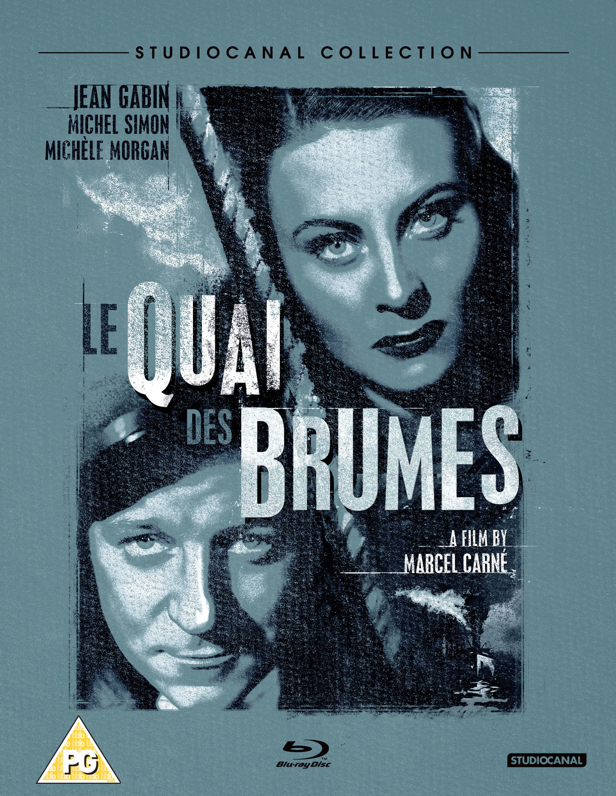
Running Time: 92 minutes
Region B Locked
Aspect Ratio: 1.66:1 1080p
French DTS-HD Master Audio 2.0 and German DTS-HD Master Audio 2.0
Optional English, German, and French subtitles
Marcel Carné’s ‘Le Quai des Brumes’ has long been overshadowed by his future works ‘Le Jour Se Lève’ (1939), and his 1945, magnum opus, ‘Les Enfants du Paradis’, but now, with the help of StudioCanal’s wonderful new restoration, it is clear that this is no less a masterpiece in its own right.
Made in 1938, and only Carné’s third feature film, ‘Le Quai des Brumes’ is a perfect example of the French film movement known as poetic realism and an early insight of the brilliance still to come. Emerging in the 1930’s, the poetic realism movement (also known as recreated realism) was a term used for the stylised, yet realistic depiction of the social conditions of the time (the term poetic realism is really an oxymoron as stylising reality contradicts the intention of depicting a true reality). The films usually have a central focus on the working class citizens or outcasts, and often build to an ultimately tragic finale, though this is not always the case. The subject of who is first credited with introducing the movement has been widely debated, but is often narrowed down to works of Jean Grémillon, Jean Vigo, and Jacques Feyder, usually which featured a lighter, more romantic finale, and was further developed by masters such as Jean Renoir, Julien Duvivier and Carné, who introduced a more atmospheric and fatalistic element to the movement.
Based on the 1927 novel by French author and songwriter Pierre Mac Orlan, Jacques Prévert’s adapted screenplay moves the action from inland Montmartre to shadowy dockland Le Havre.
‘Le Quai des Brumes’, more commonly known as ‘Port of Shadows’, is another example where, as with many films, the title has been adapted in its translation. The literal translation is ‘The Quay of the Mists’, with the French word ‘Quai’ also meaning ‘Wharf’ or ‘Dock’ and ‘Brumes’ also meaning ‘Haze’ or ‘Fog’, whereas the French word for ‘Shadows’ is ‘Ombres’, as seen in the title of Jean-Pierre Melville’s 1969 film ‘L’armée des Ombres’ or ‘Army of Shadows’.
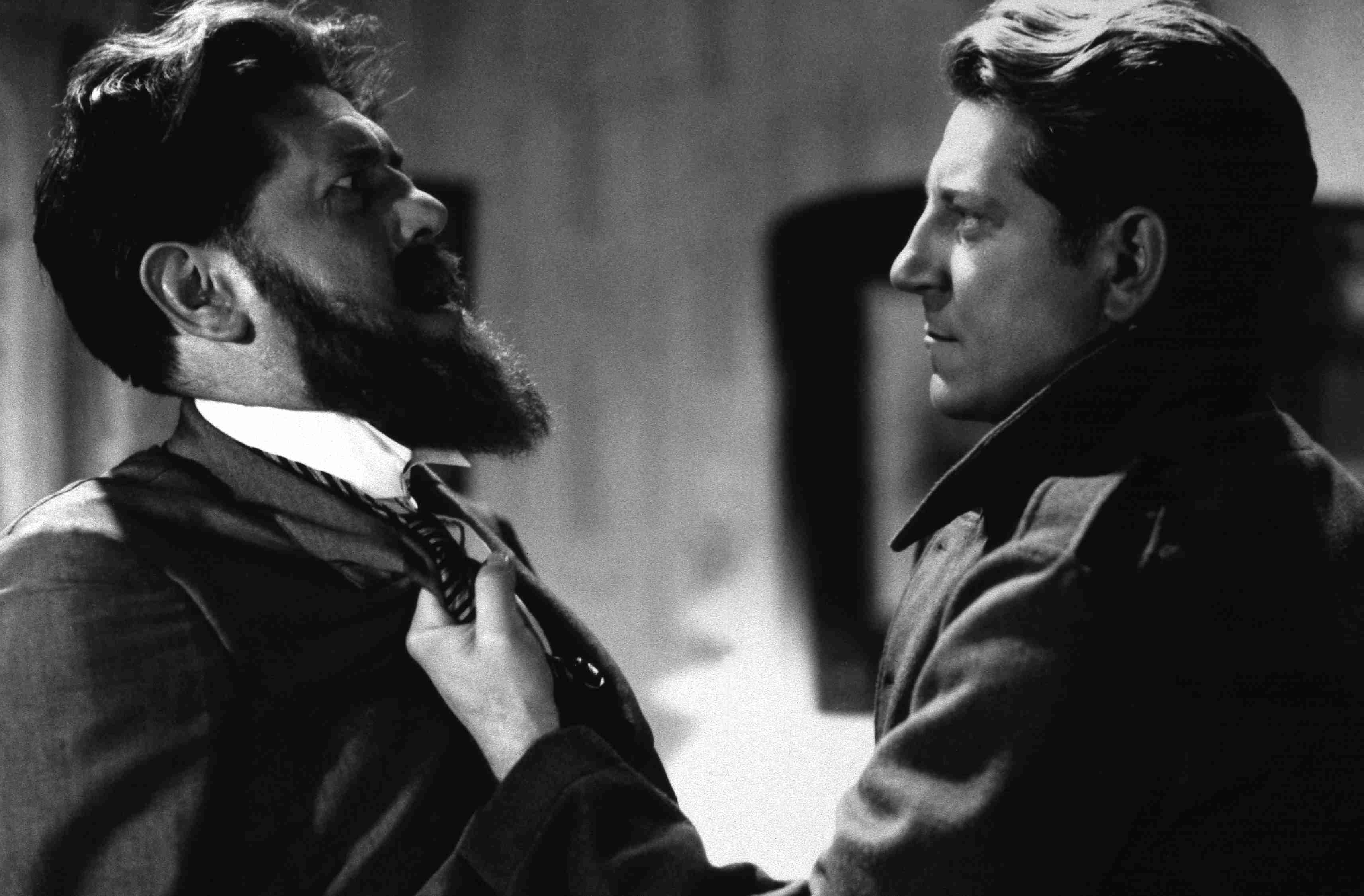 The film sees one of the greatest stars of French cinema, Jean Gabin, in the central role of army deserter Jean, who arrives in the port of Le Havre in search of a new identity. The claustrophobic atmosphere is created from the off with a lone, docked boat establishing the major theme of isolation, and the fog smothered port instantly mounting an attack on the audiences senses, and creating a sense of mystery as to what secrets are concealed within (a metaphor for the secrets concealed by our main character). Finding shelter in an old wooden shed he crosses paths with seventeen-year-old runaway Nelly (a seventeen-year-old Michèle Morgan), who is herself seeking refuge from her possessive Godfather, Zabel (played by another French great, Michel Simon). As is so often the case though a romantic affair blossoms, but as we progress through the film, the shades of his dark past soon begin to overcloud his new-formed persona. The use of the dog is very clever to again highlight the element of loneliness and the fact that, when you have nothing left, ‘man’s best friend’ is always there to turn to.
It is important now to address the various complications that surrounded the making of the film. At the time the production was being discussed, Gabin, who had to complete one more film under his contract at German film studio UFA (se Dr. Mabuse), suggested the film as a possible project. However, NAZI Minister of Propaganda, Joseph Goebbels, soon disapproved the film for depicting an anti-Nazi ideology, with the central focus on an army deserter. Free from Nazi approval, Russian-German producer, Gregor Rabinovitch, moved the project to France, which caused more problems when Rabinovitch, who until now had not yet read the script, learned of Gabin’s character’s position as a deserter, and enforced that anything “dirty” was deleted from the script. However, after Gabin’s insistence, the narrative was kept the same. At the outbreak of World War Two, the film was described as “immoral, depressing and detrimental to youth” and could be blamed if the war was lost. The film was subsequently banned, however was eventually released two years later.
If we now turn to the film itself, the script is outstanding, with the poetic, yet striking dialogue lingering long after the closing moments. It is littered with metaphors and implied resemblances, with the main themes of entrapment, isolation and fatality prominent throughout. Carné’s meticulous direction elevates the smallest details to our attention, and is an early vision of the future masterpieces still to come. The striking cinematography, lighting, production design and sound design give the film a film noir feel (an obvious influence on many future Hollywood productions), and all combine to maintain an intense atmospheric level.
 Jean Gabin’s star power was a major factor in the films eventual release and it proves a real showcase for his talent. Gabin’s main asset is his powerful on-screen presence, and using just his eyes, and gentle gestures he has the ability to convey so much from doing so little.
StudioCanal’s restoration was made on the basis of two camera negatives, the original 1938 negative and a new preservation copy scanned in 2K, and graded using the 1938 negative to maintain the original feel. As with any film of age there is bound to be some problems with the image, and though there are signs of age, it didn’t affect my viewing experience at all. The overall smoothness and clarity of the image is superb, with some light Digital Noise Reduction (DNR); there is only one short clip early on in the film with any noticeable damage to it. If I had one point to make, it would be that the brightness of the image is quite high throughout, and could maybe have reduced to accentuate the ‘shadows’ of the title. In terms of sound, the audio is clean, with minimal hiss, and Maurice Jaubert’s haunting score perfectly adds to the overall feel.
Special Features include:
On The Port Of Shadows – A documentary tracing the film’s production
Introduction to Le Quai Des Brumes by Ginette Vincendeau, Professor and Film Critic
Restoring Le Quai Des Brumes
Booklet on the movie written by Ginette Vincendeau
Overall:
This is a wonderful new addition to the Blu Ray catalogue, and StudioCanal is to be greatly commended on the work that has gone in to its release. If you have never seen the film or are looking to upgrade previous releases, then now is the perfect time to do so. As I have previously said, Carné’s later works have long overshadowed this piece, and now we have a definitive version of an early work that helped cement his place as one of cinema’s great directors.
Release date: 10th September 2012
Pre-order Now:


Also available as standard DVD:

