


The whistle of a steam locomotive echoes through the mountains.
On a cool morning in Durango, Colorado, steam hisses from beneath the engine, carrying the faint scent of hot oil. You can feel its warmth as you pass the great black driving wheels, while clouds of white vapour drift above the carriages in the morning sunlight.
The connecting rods begin to move, and with a gentle tug the carriages pull away from the platform.
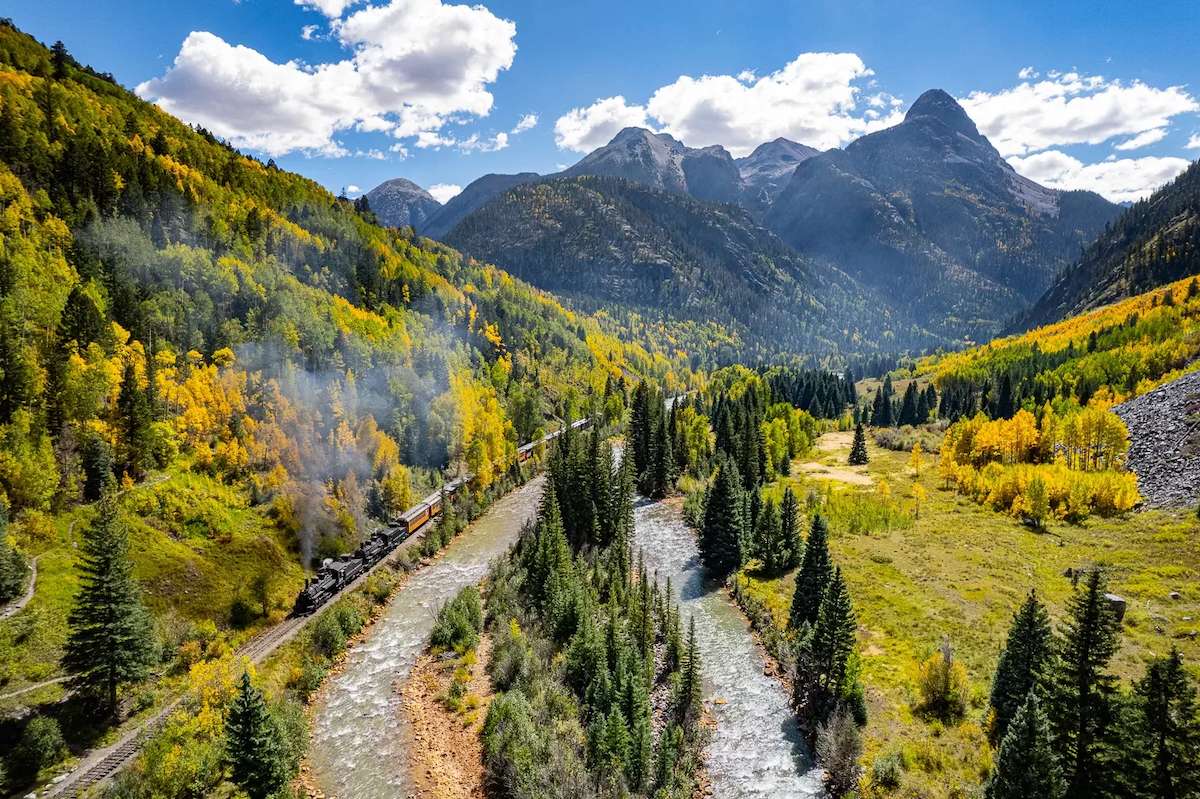
From an open-sided carriage, watch the rooftops of Durango give way to wooded hills as the locomotive settles into its rhythm. Sunlight catches the Animas River as it tumbles over the rocks beside the railway. The scent of pine drifts through the carriage as the train follows the river deeper into the mountains.
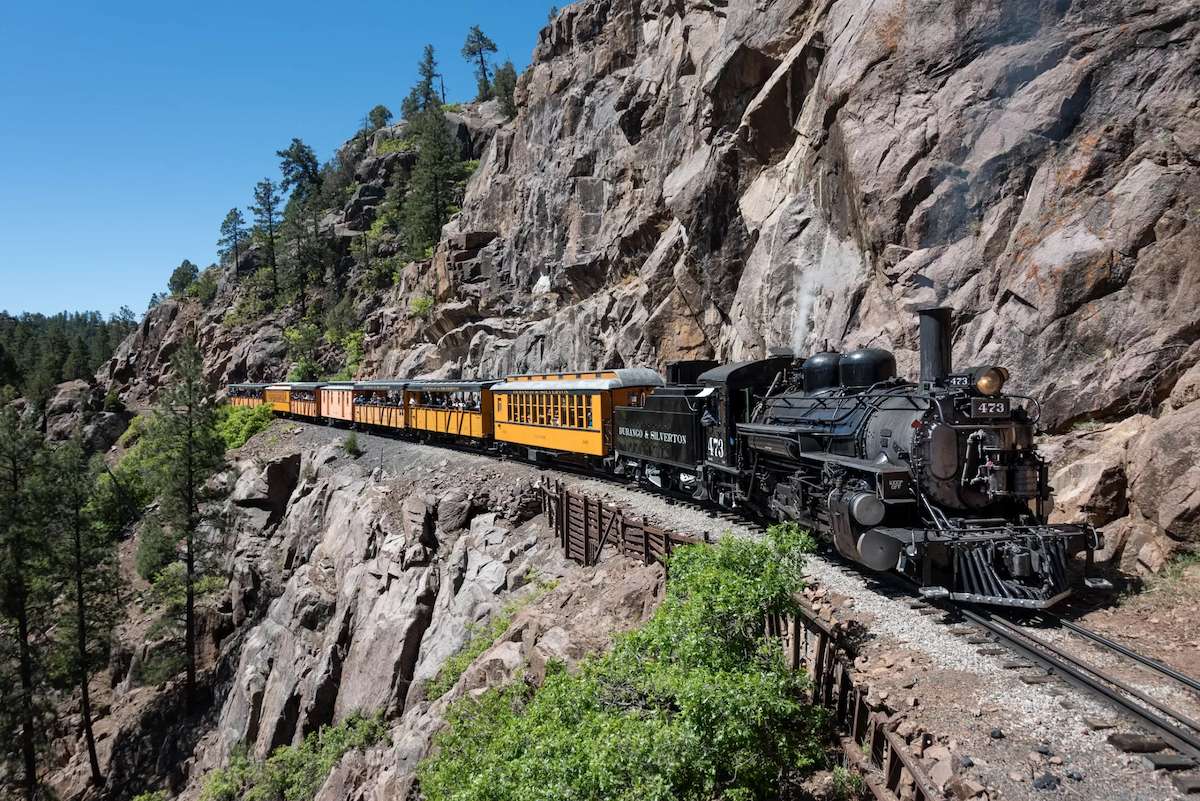
As the valley narrows, the railway climbs onto a ledge cut into the mountainside. The rock face passes close to the carriage on one side; on the other, the rush of the river rises from the canyon far below.
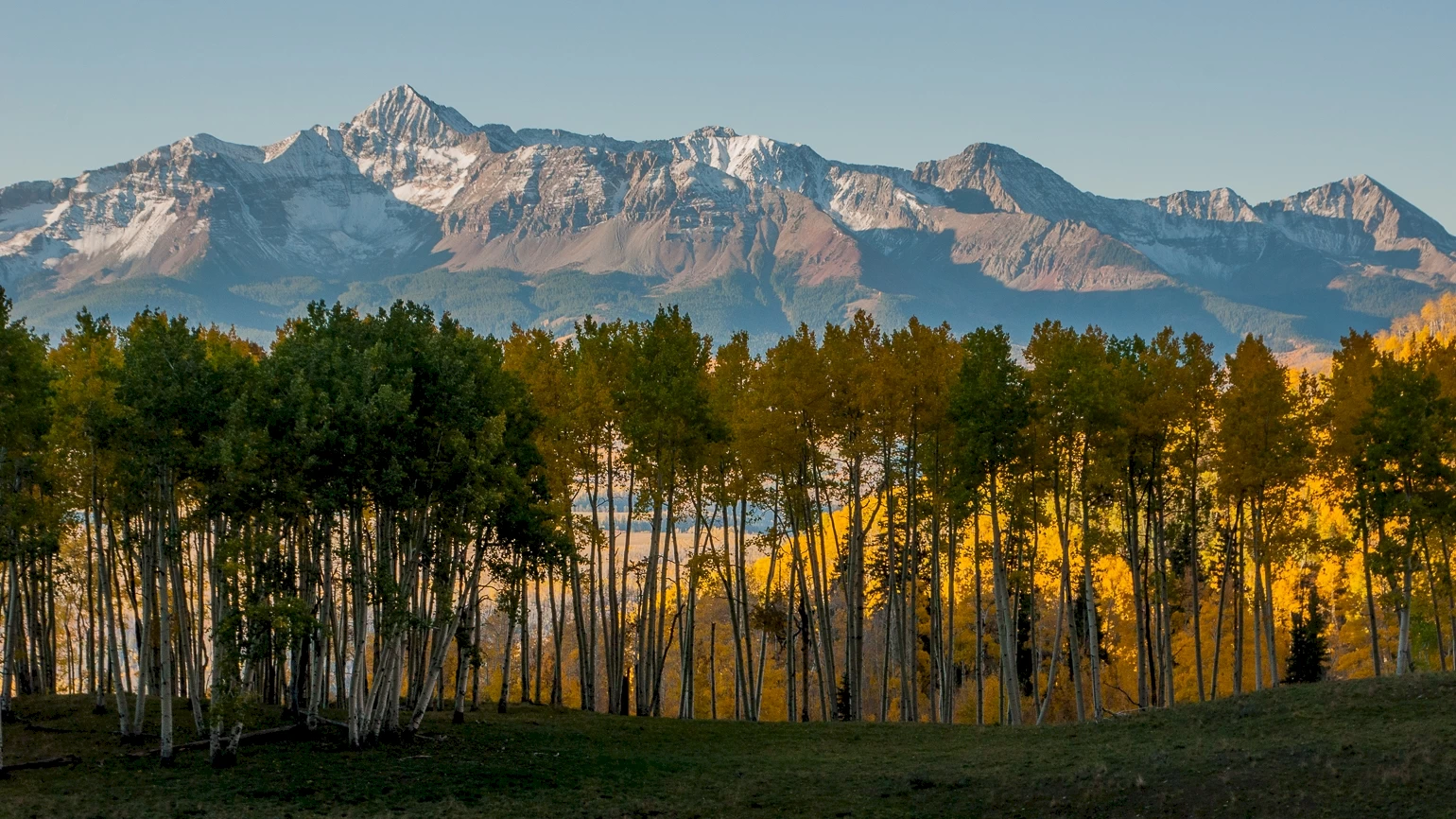
In late September, golden aspens light up the mountainsides between dark forests of spruce and fir. Beyond them rise the bare summits of the San Juan Mountains. For miles, there is scarcely a road in sight.
Then the valley opens and a nineteenth-century silver town appears beneath an amphitheatre of peaks. Painted timber storefronts, brick hotels and broad streets occupy a pocket of land between the mountains.
This is Silverton. Beyond it lie abandoned settlements of the silver rush, steaming hot springs beneath the cliffs of Ouray and the old mining streets of Telluride, where music and cinema have found a home.
Admitted to the Union on 1 August 1876, Colorado celebrates 150 years of statehood alongside America’s 250th anniversary in 2026. For the tenth instalment of The Arts Shelf’s USA 250 Series, we explore this south-western corner of the Rockies, beginning our journey on a railway that has carried passengers into the mountains since 1882.
Durango: A Railway Town with a Literary Soul
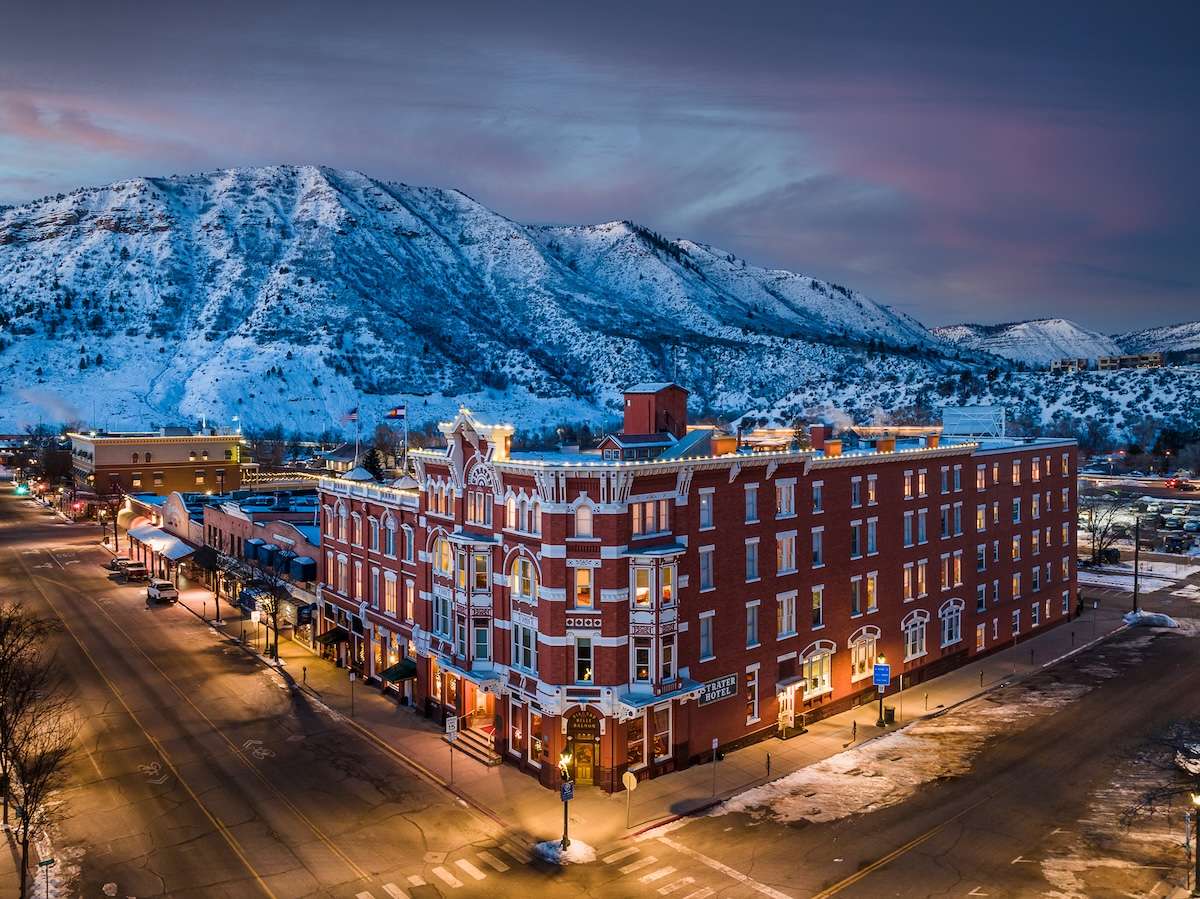
At the southern end of Durango’s Main Avenue, the railway depot stands a short walk from the red-brick façade and corner turret of the Strater Hotel.
Established in 1887 by Henry Strater, a pharmacist from Cleveland, the hotel is filled with antique walnut furniture, carved bedsteads and richly patterned wallpapers.
Upstairs, in Room 222, the Western novelist Louis L’Amour’s writing table still stands. He regularly requested the room, directly above the hotel’s Diamond Belle Saloon, where the sound of honky-tonk piano music helped him find the atmosphere for his Sackett novels.
The room can still be booked. Downstairs, over a nightcap in the Diamond Belle, you can listen to the ragtime piano before retiring to your room with a few chapters of L’Amour.
In the morning, the Durango Diner serves coffee and breakfast burritos smothered in green chilli. The warmth of the roasted peppers lingers long after the last mouthful.
Along the High Line, Into the Rockies
It took less than a year to build the 45-mile railway between Durango and Silverton. Completed in 1882, its tracks carried passengers and supplies into the mountains and ore back down the valley.
The three-foot gauge allowed the railway to negotiate tight curves. Beyond Rockwood, the High Line follows a ledge some 200 feet above the Animas River. As the engine works uphill, the beat of its exhaust reverberates against the rock. Across the canyon, forests climb towards the distant peaks, while the train continues along its narrow shelf of mountainside.
The Durango & Silverton Narrow Gauge Railroad operates steam locomotives dating from the 1920s, now fuelled by oil. Other engines survive thanks to the dedication of railway enthusiasts.
Among them is locomotive No. 315, built in 1895 and retired in 1949. After years on public display, the timber of its cab had rotted and much of its equipment was missing.
More than 30 volunteers from the Durango Railroad Historical Society helped rebuild the cab in white ash, refurbish the machinery and restore the boiler. On 24 August 2007, after thousands of hours of work, it moved under its own power for the first time in 58 years.
A month later, No. 315 reached Silverton for the first time in its history.
Hollywood recognised the possibilities of the railway. Richard Sale and Mary Loos, the writers behind A Ticket to Tomahawk, were model railway enthusiasts, and their 1950 Western gave a starring role to a locomotive named Emma Sweeny. Night Passage and Butch Cassidy and the Sundance Kid subsequently brought more of the region’s scenery to cinema audiences.
The journey takes around three and a half hours. Bring a camera, but leave it resting in your lap for a while. The river deserves to be heard.

Before the Silver Rush: The Mountains of the Ute People
The valleys and mountain passes through which the railway now travels were familiar to the Ute people long before prospectors arrived. Families moved with the seasons, hunting elk and deer, fishing the rivers and gathering plants.
The discovery of precious metals brought increasing pressure on their lands. Under the Brunot Agreement of 1873, the Ute bands lost approximately 3.7 million acres of their Colorado reservation.
The Southern Ute Cultural Center and Museum in Ignacio tells the history of the Ute people from their own perspectives. The Southern Ute Indian Tribe continues to exercise hunting and fishing rights in the Brunot area, rights it retained under the agreement.
Further north, the Ute Indian Museum in Montrose occupies part of the former homestead of Chief Ouray and his wife, Chipeta, who is buried on the grounds.
The museum developed its permanent exhibition in consultation with all three Ute tribes. Among the objects chosen to tell their story are a velvet dress belonging to Chipeta, a Bear Dance shawl and a beaded mobile-phone case.

Silverton: The Town Beneath the Peaks
At more than 9,000 feet above sea level, Silverton’s broad streets seem to end at the foot of the mountains. Painted storefronts stand beside substantial brick buildings, among them the handsome Grand Imperial Hotel, which has occupied its prominent position on Greene Street since 1883.
The discovery of a rich silver vein in nearby Arrastra Gulch in 1871 transformed Silverton’s fortunes. At the Mayflower Mill, built decades later, buckets of ore arrived by aerial tramway before passing through crushers and processing equipment.
Mining engineer Charles A. Chase helped develop the operation in the 1920s and kept it working through the hardships of the Great Depression.
The mill closed in 1991, but local preservationists saved its machinery and buildings. The San Juan County Mining Heritage Center and the old gravestones of Hillside Cemetery offer more intimate glimpses of the community that depended upon the mines.
The industry has left more troubling reminders. In 2015, an accidental release of contaminated water during an Environmental Protection Agency investigation at the Gold King Mine turned the Animas River a startling orange.
Spend a night in Silverton if you can. Once the excursion trains have departed, the streets grow quieter. With the afternoon light moving across the mountains, there is time to wander beyond Greene Street and explore the town at your own pace.
The Million Dollar Highway and the Ghosts of the Silver Rush
On the road from Durango to Silverton, stop at Molas Pass, where summer wildflowers scatter colour across high meadows beneath the peaks of the San Juans.
From Silverton, a rough mountain road leads to Animas Forks, an abandoned mining settlement at more than 11,000 feet. Hundreds of people once lived here, enduring winters that could leave them cut off from neighbouring towns for weeks.
During a blizzard in 1884, residents had to tunnel through the snow between buildings. Among the weathered timber houses that survive is the Duncan House, with its projecting bay window. Imagine the snow gathering outside that window, the mountains disappearing into the storm and the long wait for spring.
Explore the settlement with an experienced four-wheel-drive guide before returning to Silverton.
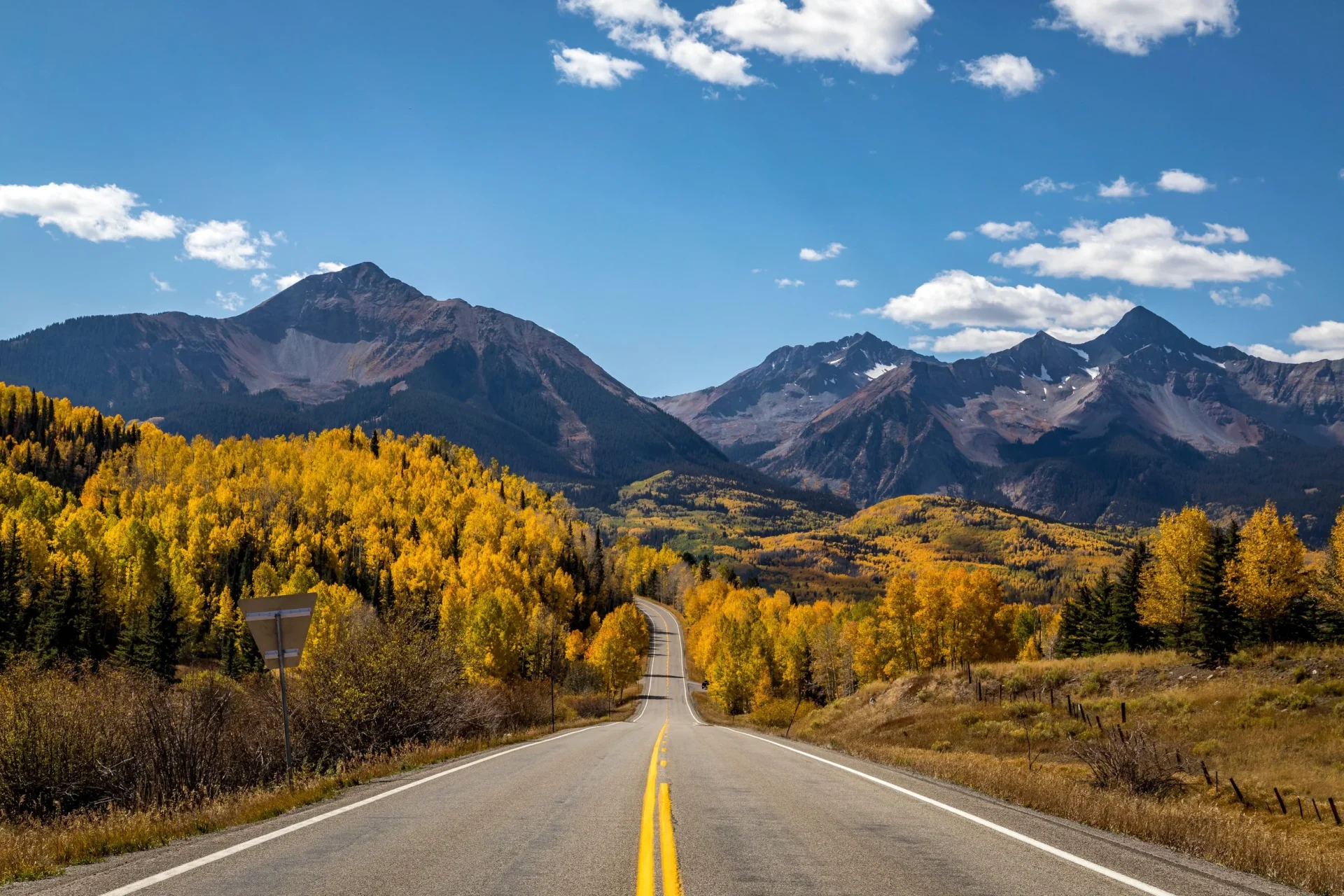
North of town, US Route 550 climbs towards Red Mountain Pass, more than 11,000 feet above sea level. The forest thins, revealing mountains streaked with reds and ochres, their colours the result of iron-rich minerals in the rock.
Along the Million Dollar Highway, the road curves around the mountainside, with steep drops into the valleys below. Around one bend, a wall of red rock rises beside the tarmac; around the next, the view opens across successive ridges towards distant peaks. Water descends through gullies, and abandoned mining structures appear among the trees. In places, there is no guardrail between the road and the mountainside.
The Russian-born entrepreneur Otto Mears built toll roads and narrow-gauge railways through this terrain to connect isolated mining communities.
Ouray: Hot Springs and Victorian Grandeur
The road descends from Red Mountain Pass towards Ouray, winding beneath steep cliffs. Soon, the Victorian buildings of Main Street appear in the valley below.
At the Ouray Hot Springs Pool, warm mineral water closes around your shoulders. The mountain air feels cool against your face as steam drifts across the surface, briefly obscuring the peaks. Unlike many natural hot springs, these waters lack the familiar sulphurous smell.
Nearby, the roar of Box Cañon Falls reverberates through a narrow cleft in the rock. Sections of the Ouray Perimeter Trail offer views across the rooftops towards the peaks.
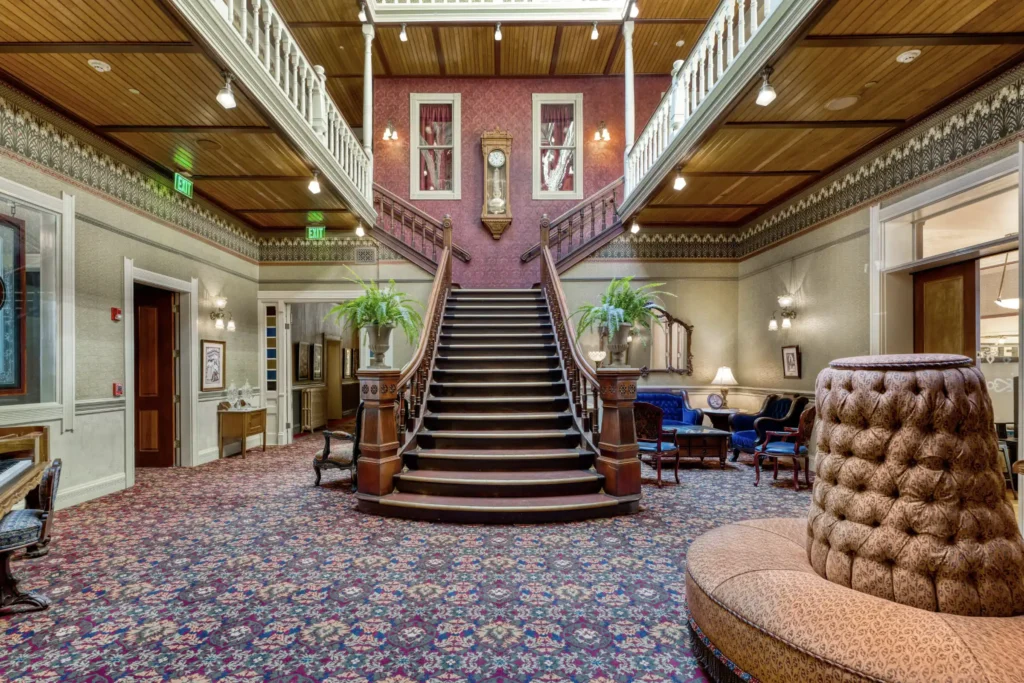
Back on Main Street, a grand oak staircase rises through the central rotunda of the Beaumont Hotel. Balustraded galleries overlook the lobby beneath a skylight.
When the hotel opened in 1887, its dining room featured stained glass and an orchestra gallery. Among its celebrated guests were Sarah Bernhardt and President Theodore Roosevelt.
By the late 1990s, part of the roof had collapsed. Dan and Mary King bought the building in 1998 and restored it, reopening the hotel in 2003.
Further along Main Street, The Outlaw Restaurant owes its origins to the Bonatti family. Joe and Christina emigrated from the Tyrol, and their sons ran the café that preceded the restaurant, rebuilding after a bus crashed into it in 1946.
John Wayne became a familiar visitor during the filming of True Grit, and one of his cowboy hats remains on display.
After a day in the mountains, order a steak, settle in for the evening and leave the rest of the journey until morning.
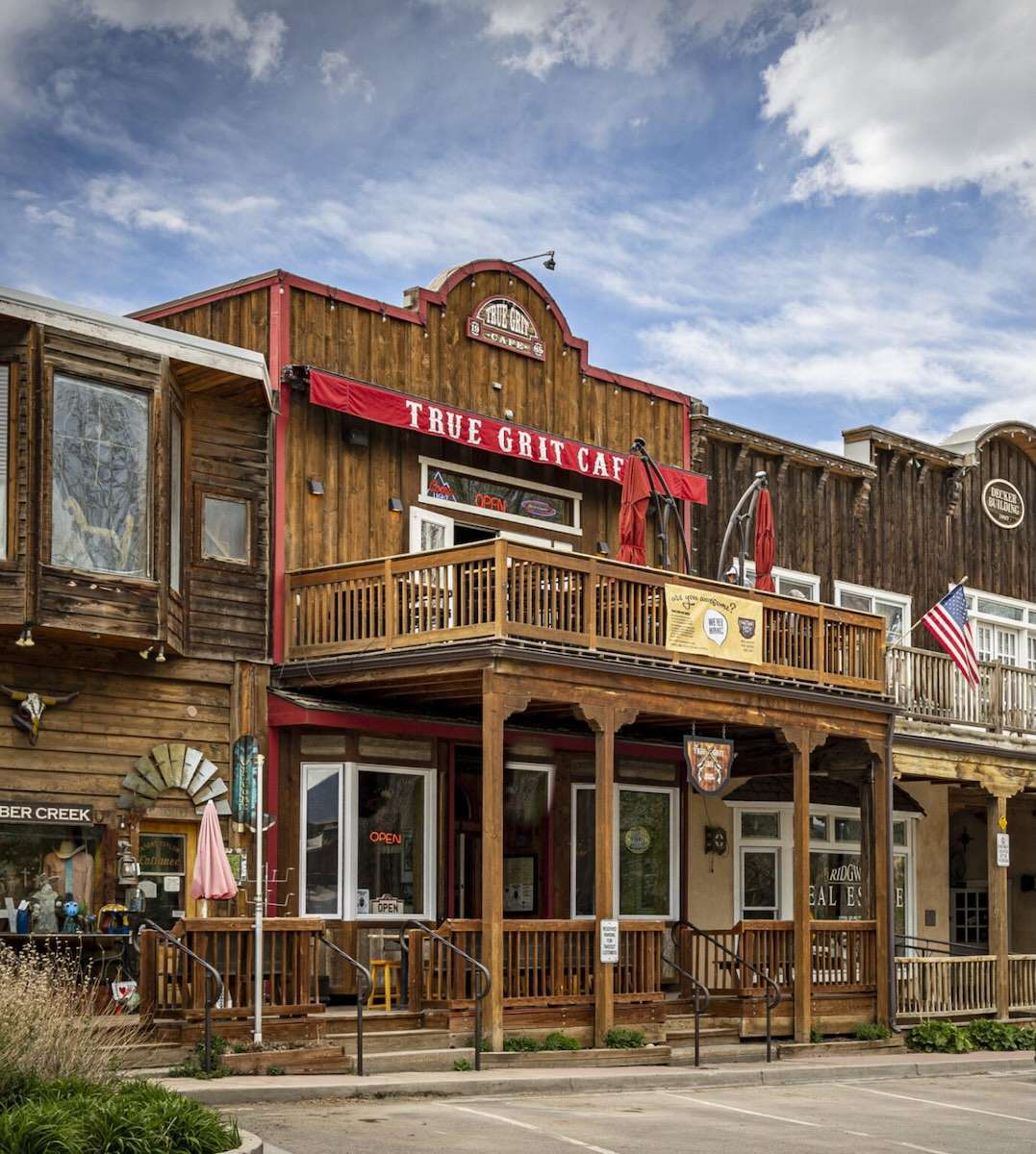
Ridgway: In the Footsteps of Rooster Cogburn
In the autumn of 1968, Hollywood arrived in Ridgway. Over the course of six weeks, director Henry Hathaway’s film crew transformed the streets of this small Colorado railroad town into Fort Smith, Arkansas, for True Grit, the Western that would earn John Wayne his only Academy Award.
Gallows were erected in Hartwell Park, a courthouse façade appeared beside the old firehouse, and the surrounding streets became the setting for young Mattie Ross’s quest to avenge her father’s murder.
More than half a century later, traces of the film remain. Inside the True Grit Café, a grocery-store sign painted for the production survives on what was once an exterior wall. Nearby, the Ouray County Ranch History Museum houses the jail wagon used by Wayne’s one-eyed marshal.
The most memorable locations, however, lie beyond the town. Near Owl Creek Pass, an alpine meadow beneath the towering silhouette of Chimney Rock provided the setting for the film’s climactic confrontation, in which Rooster Cogburn takes the reins between his teeth and charges towards Robert Duvall’s gang with guns blazing.
West of Ridgway, along Last Dollar Road, the ranch used as Mattie’s family home stands beneath the San Juan Mountains. Here, in the film’s closing moments, Wayne jumps his horse over a fence and rides away.
The ranch is private property, but the surrounding scenery can be enjoyed from the public road. In autumn, golden aspens frame the open ranchland and the jagged summits of the Sneffels Range rise in the distance.

Telluride: From Silver Mines to the Silver Screen
Look along Colorado Avenue and the buildings frame a view that seems almost theatrical. At the head of the valley, Bridal Veil Falls descends the mountainside in a slender ribbon of white.
In 1889, Butch Cassidy committed his first recorded bank robbery in Telluride. Within a generation, the prosperous mining town had built the Sheridan Opera House, where performances still take place beneath the historic proscenium.
In 1974, Bill and Stella Pence, Tom Luddy and James Card established the Telluride Film Festival, bringing cinema audiences to the old mining streets.
The Telluride Bluegrass Festival began the same year. Each June, the sound of fiddles, mandolins and banjos carries across Town Park, with mountains rising behind the stage. As the afternoon light changes on the surrounding slopes, music continues beneath the open sky.
After a performance, the historic bar of the New Sheridan Hotel is a fitting place to end the evening.
In the morning, board the free Telluride Gondola towards Mountain Village. Colorado Avenue grows smaller beneath the cabin, the rooftops give way to forest and the mountains open out around you.
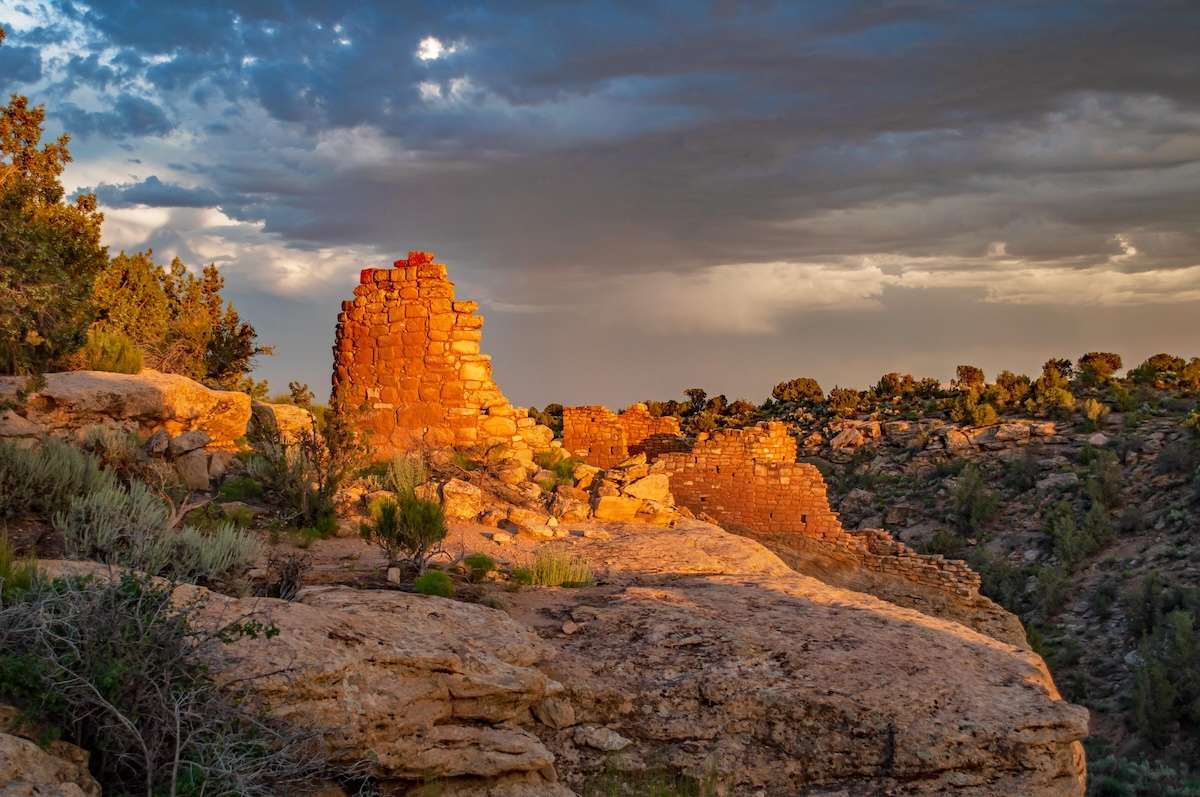
The Long Way Home
The road from Telluride climbs towards Lizard Head Pass before winding south through the forests towards Dolores. Gradually, the high mountains recede and the landscape opens into the mesas and broad skies of south-western Colorado.
With another day to spare, visit Mesa Verde National Park, where the dwellings of Ancestral Pueblo communities occupy vast alcoves in the sandstone cliffs. From across the canyon, rows of rooms and circular kivas are visible beneath the shelter of the rock.
Beyond Cortez and Mancos, the road returns to Durango, completing the 236-mile San Juan Skyway.
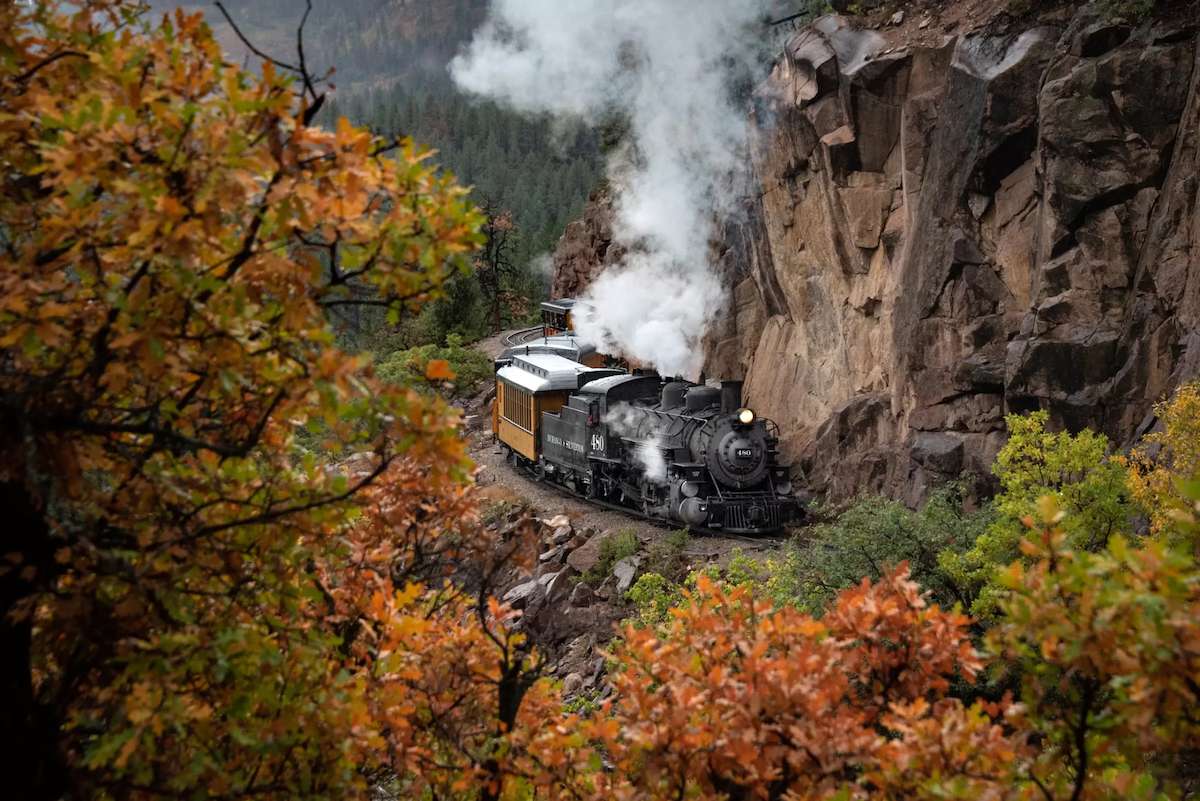
USA 250: Before You Go – What to Watch, Read and Listen To
Watch – A Ticket to Tomahawk (1950)
Richard Sale’s Technicolor Western celebrates the frontier railway, with the San Juan Mountains providing the backdrop to the adventures of Emma Sweeny.
Watch – The Naked Spur (1953)
Filmed around Durango, Anthony Mann’s psychological Western stars James Stewart, Janet Leigh and Robert Ryan amid Colorado’s rugged mountain landscapes.
Watch – Butch Cassidy and the Sundance Kid (1969)
Paul Newman and Robert Redford star in George Roy Hill’s classic Western, filmed partly in Colorado, where Telluride’s outlaw history adds another connection.
Watch – True Grit (1969)
John Wayne’s Oscar-winning performance as Rooster Cogburn is essential viewing before exploring the film’s locations around Ouray and Ridgway.
Read – Sackett (1961), by Louis L’Amour
A frontier adventure to enjoy at the Strater Hotel, where L’Amour worked on his Western novels.
Read – Centennial (1974), by James A. Michener
Written for America’s bicentenary, this epic novel explores the people and conflicts that shaped Colorado.
Read – The Shining (1977), by Stephen King
Inspired by the Stanley Hotel in Estes Park, King’s mountain Gothic explores the darker side of Colorado’s grand hotels and isolated winters.
Listen – Black Bear Road (1975), by C. W. McCall
Featuring The Silverton and Ghost Town, a nostalgic soundtrack to the mining settlements and mountain roads of the San Juans.
Listen – Too Late to Turn Back Now (1977), by New Grass Revival
Recorded live at Telluride’s fourth bluegrass festival, this exuberant album captures the town’s musical renaissance.
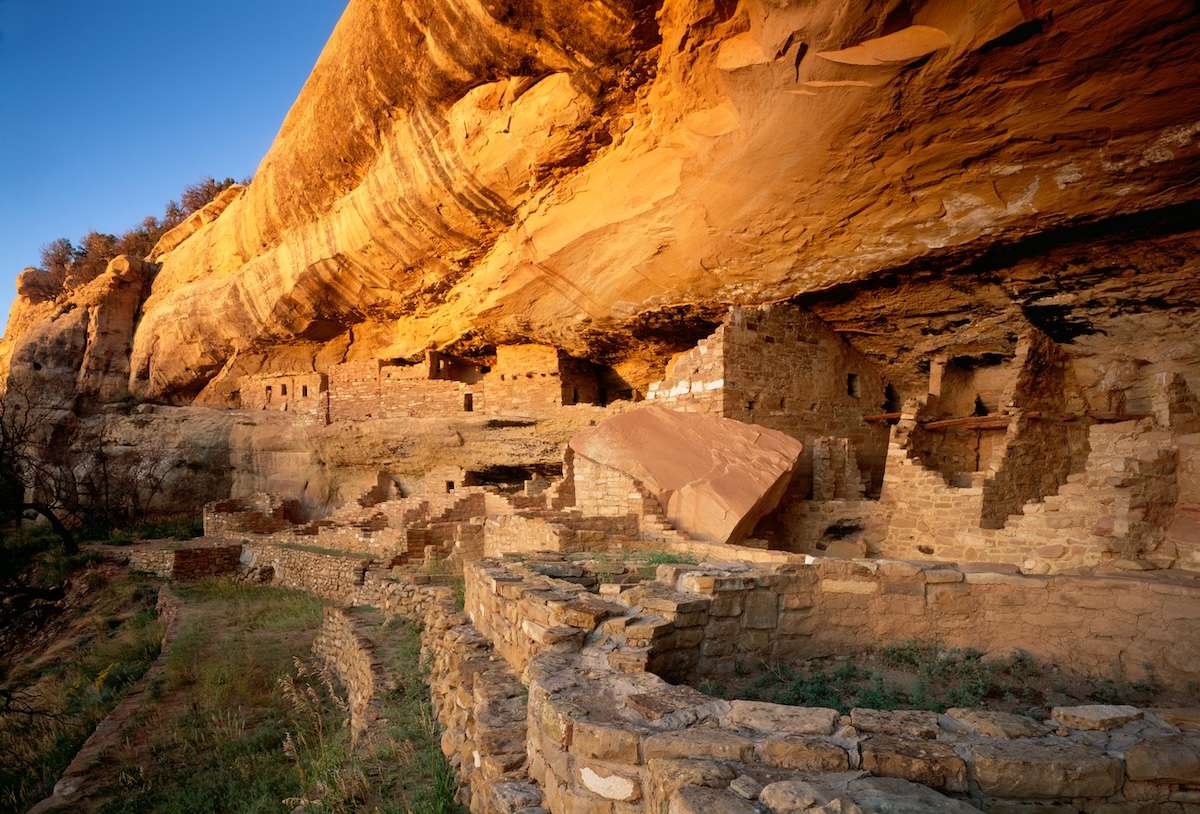
How to Spend Seven Days in the San Juan Mountains
Day One: Historic Durango
Explore Main Avenue and the railroad museum before an evening at the Diamond Belle Saloon.
Day Two: All Aboard for Silverton
Ride the steam railway to Silverton and back, allowing time for lunch in town.
Day Three: Into the Mining Country
Hire a car, visit Molas Pass and explore Silverton’s mining heritage. Stay overnight.
Day Four: Animas Forks and the Million Dollar Highway
Take a guided excursion to Animas Forks, then cross Red Mountain Pass to Ouray.
Day Five: Hot Springs and Mountain Trails
Enjoy Ouray’s hot springs, waterfalls and Victorian hotels.
Day Six: From Ridgway to Telluride
Explore Ridgway’s True Grit locations before continuing to Telluride for the night.
Day Seven: The San Juan Skyway
Ride Telluride’s gondola, then return to Durango via Lizard Head Pass, Dolores, Cortez and Mancos.
Planning Your Visit
Getting There: Fly to Durango-La Plata County Airport via a major US hub.
Getting Around: Enjoy the railway without a car, then hire one for the San Juan Skyway. Animas Forks requires suitable backcountry transport.
When to Visit: Summer brings wildflowers and festivals; late September and early October offer autumn colour. Check seasonal schedules and mountain road conditions.
Where to Stay: The Strater, Grand Imperial, Beaumont and New Sheridan offer historic accommodation. Book ahead and allow time to acclimatise.
Extend Your Journey: Visit Mesa Verde National Park, the Ute Indian Museum and Black Canyon of the Gunnison National Park, or ride the Cumbres & Toltec Scenic Railroad. Colorado’s Front Range offers a separate journey through Rocky Mountain National Park, Garden of the Gods and Red Rocks Amphitheatre.
The Romance of the Rockies
When the railway first reached Silverton in 1882, it brought the outside world closer to a town surrounded by mountains. Miners, merchants and families travelled these tracks in search of work, prosperity and the possibility of a different life.
Few could have imagined that, generations later, people would cross oceans simply for the pleasure of making the same journey.
The silver fortunes have long since dispersed. Grass grows around the timber houses of abandoned settlements, but the old hotels still welcome travellers, music drifts through the saloons and the locomotives continue to climb towards Silverton.
Somewhere along the Animas River, the train rounds another bend. The mountains rise beyond the forest, the water rushes over the rocks below and a cloud of steam catches the afternoon light before disappearing among the trees.
Long after the last carriage has disappeared around the bend, the whistle will still be travelling through the mountains.
To discover more about Colorado and plan your own journey through the Rocky Mountains, visit Colorado.com, VisitDurango.org and DurangoTrain.com. Explore more extraordinary American destinations in The Arts Shelf’s dedicated USA 250 Series.

