

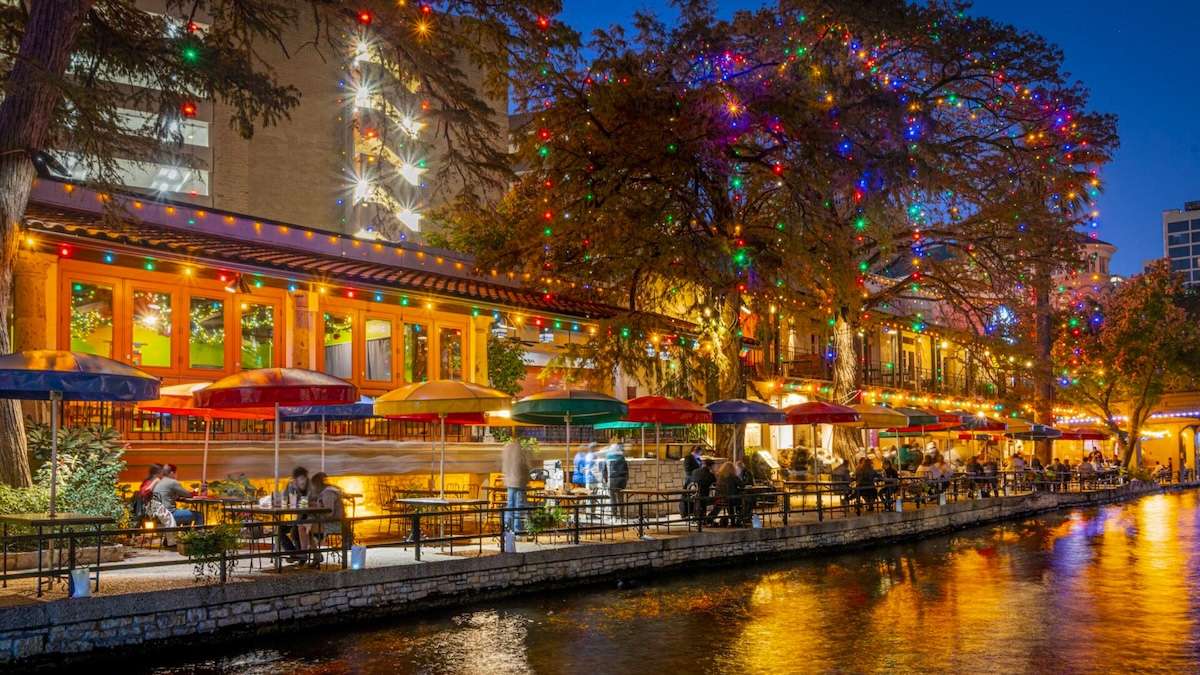
In San Antonio, some of the loveliest tables in the city are a little below street level.
Stone staircases descend from the busy pavements of downtown into a world of arched bridges, overhanging cypresses and restaurant terraces. Colourful parasols shelter tables at the water’s edge, and as evening falls, restaurant lights mingle with the reflections of passing boats.
At the Arneson River Theatre, the audience sits on grassy terraces on one bank and the performers occupy a stage on the other. Between them flows the San Antonio River.
Follow that same river for a few miles and the scenery changes quite dramatically. Beyond the restaurants and hotels stand the magnificent churches of Spanish missions established decades before the Declaration of Independence.
From their outlying ranches, cattle raised by Indigenous mission communities would help sustain Spanish troops fighting the British during the American Revolution.
In the latest instalment of The Arts Shelf’s USA 250 Series, we discover a city whose contribution to American independence began long before Texas became part of the United States.
The River That Nearly Disappeared
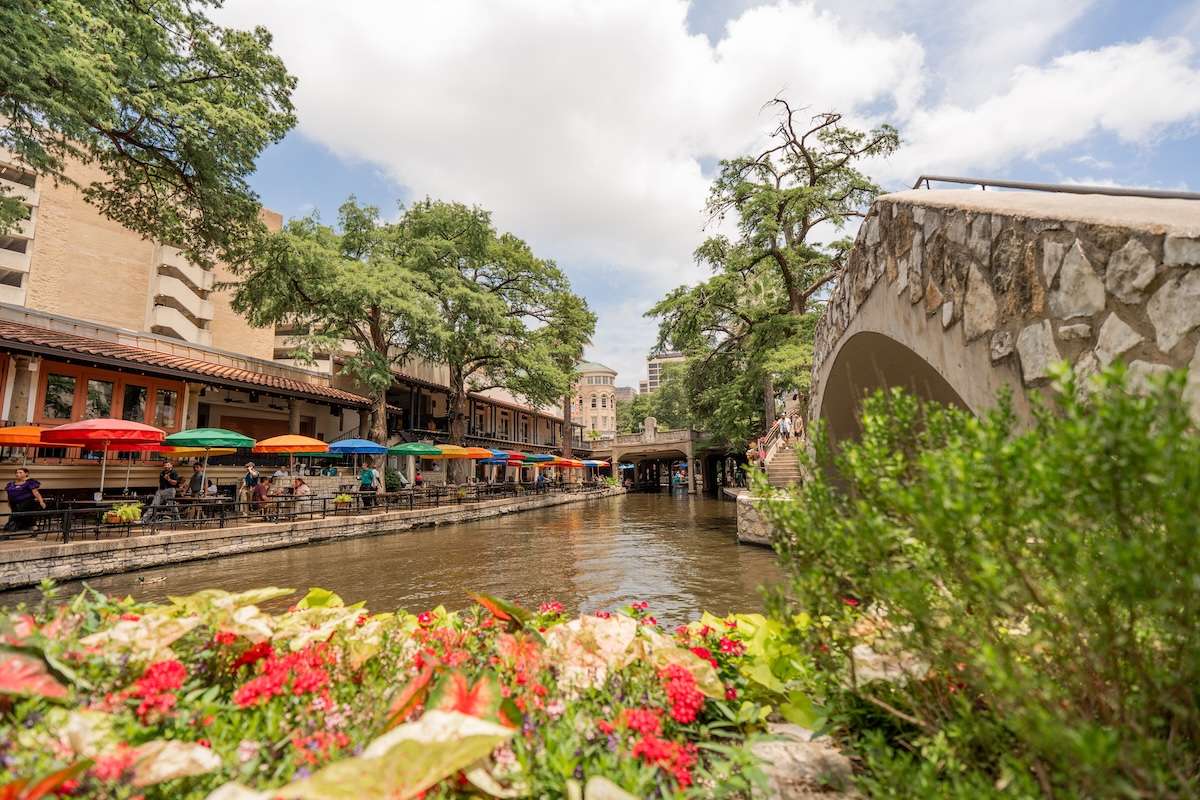
There might have been no River Walk at all. In September 1921, the San Antonio River rose with devastating consequences. Among the flood-control proposals that followed was a plan to fill in its downtown bend.
Conservationists fought to save it. In 1929, architect Robert H. H. Hugman proposed a more imaginative future: waterside gardens, shops and pedestrian pathways. Construction began a decade later, during the Depression, and the original development opened in 1941.
The river acquired its most recognisable splash of colour after Casa Rio opened in 1946. Its cheerful parasols have since become almost inseparable from the city’s image.
Climb the steps beside the Arneson Theatre into La Villita Historic Arts Village, where old houses accommodate galleries and craft shops, or cycle south along the Mission Reach, where restaurant terraces give way to restored grasslands and the bell towers of another century.
Before Texas Was Texas
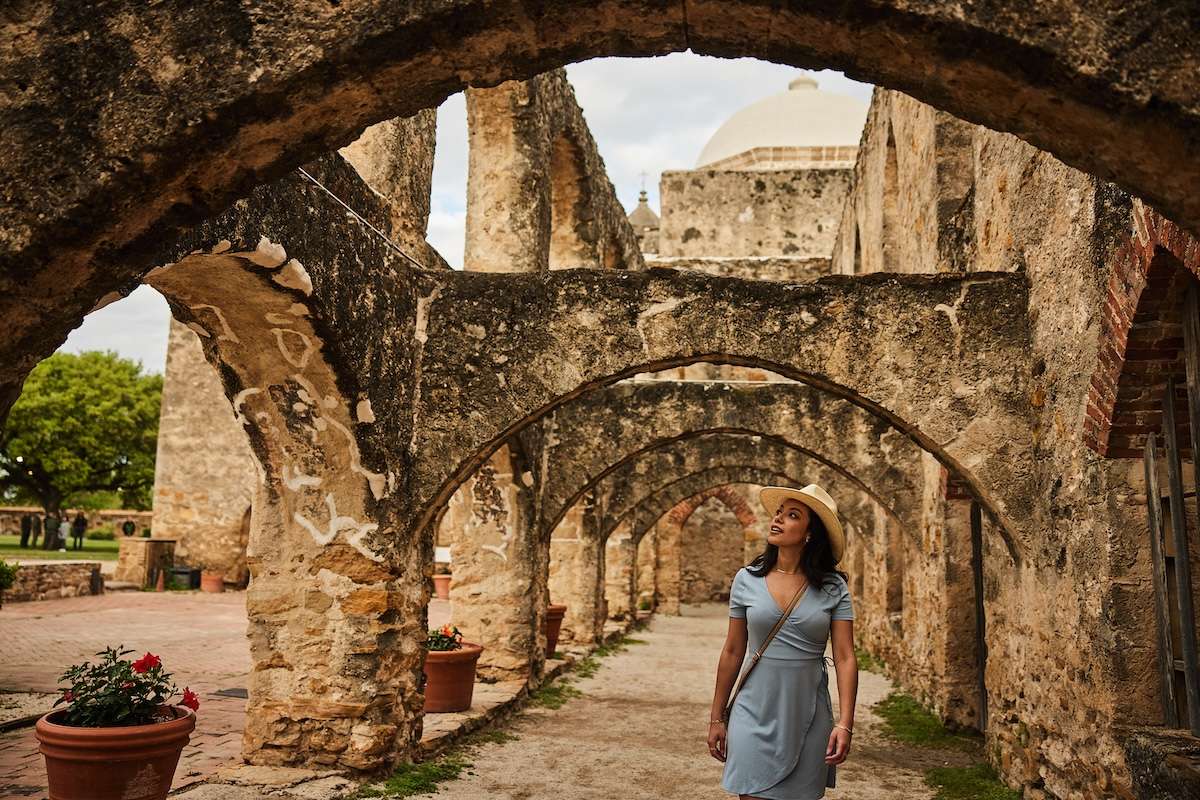
Around the celebrated Rose Window at Mission San José, eighteenth-century limestone blossoms into an intricate tangle of flowers, leaves and curling scrolls. Local legend attributes the carving to Pedro Huizar, mourning a sweetheart lost at sea, although the sculptor’s identity remains uncertain.
Founded in 1720, San José was among five Franciscan missions established along the San Antonio River. Their churches stood at the heart of communities that included living quarters, workshops, granaries and irrigated fields. Indigenous craftsmen worked the stone, farmers tended crops and herdsmen rode out to the ranches.
The Spanish Crown intended these settlements to secure its northern frontier. For Indigenous families confronting disease, displacement and conflict, the missions sometimes offered refuge, but entering their gates could mean relinquishing familiar languages, spiritual practices and ways of life. The churches that survive today bear witness to extraordinary craftsmanship and to the profound upheavals experienced by the people who built them.
The Payaya knew the river as Yanaguana. Today, communities including the Tāp Pīlam Coahuiltecan Nation continue to protect sacred places, preserve ancestral knowledge and maintain connections with the missions and their burial grounds.
San Antonio developed around the mission and military presidio established in 1718. In March 1731, after an arduous journey via the Caribbean and Mexico, 56 Canary Islanders arrived and established the first organised civil government in Texas. Their settlement centred on what is now Main Plaza, where San Fernando Cathedral stands today.
San Antonio and the American Revolution
The settlements were already well established when Spain entered the American Revolutionary War against Britain in 1779. Spanish military commander Bernardo de Gálvez drew supplies from Texas for his campaigns along the Gulf Coast. Records from 1781 document the dispatch of more than 400 cattle from Rancho de las Cabras, the ranch associated with Mission Espada.
The labour of Indigenous communities helped sustain an army fighting British forces hundreds of miles away. Their contribution to American independence was made on the ranches of Spanish Texas, in a landscape that would later become synonymous with the American cowboy.
At Mission Concepción, fragments of painted decoration survive inside the church. Further south, the farmland around Mission San Juan and the stone arches of the Espada Aqueduct offer glimpses of the ingenuity behind these settlements.
Together with Mission Espada, San José and the original Mission San Antonio de Valero, they form part of a UNESCO World Heritage Site inscribed in 2015. The four mission churches south of downtown remain places of worship.
The fifth, of course, became famous for a rather different reason.

Remembering the Alamo
Anyone introduced to the Alamo through John Wayne’s magnificent 1960 Technicolor epic might be surprised by the intimacy of the actual building. Wayne recreated the mission on a ranch near Brackettville to accommodate the enormous spectacle Hollywood demanded.
The familiar limestone church of the Alamo is one of two original buildings surviving from a much larger fortified compound.
From Spanish Mission to Military Stronghold
Founded in 1718 as Mission San Antonio de Valero, the settlement served as a Franciscan mission until 1793. A decade later, Spanish cavalry occupied the former mission, converting its buildings into a military garrison. The soldiers came from Alamo de Parras in Mexico, from which the compound acquired its famous name.
In 1813, republican forces captured San Antonio and proclaimed an independent Texas within a proposed Mexican republic, only to suffer a devastating defeat at the Battle of Medina. Mexico achieved independence from Spain in 1821, but disputes over immigration, land, slavery and the centralising policies of Mexican President Antonio López de Santa Anna eventually brought Texas into open rebellion.
Having captured San Antonio in December 1835, Texan revolutionaries fortified the old mission. On 23 February 1836, Santa Anna arrived with a considerably larger army. For thirteen days, the defenders held out behind the compound’s walls. On the morning of 6 March, Mexican troops stormed their positions, killing the garrison’s defenders, among them David Crockett, James Bowie and William B. Travis.
The defeat inspired the rallying cry of ‘Remember the Alamo!’, carried into battle when the revolutionary army defeated Santa Anna at San Jacinto the following month.
Today, visitors can explore the historic church and the Long Barrack, where some of the defenders made their final stand. The surviving buildings stand amid the modern city.
Juan Seguín and the Price of Independence
Among those defending the Alamo was a young man born into a prominent San Antonio family. Juan Seguín had raised a company of Tejano volunteers and left the besieged compound as a courier. His departure saved him from the fate that awaited his fellow defenders.
Seguín subsequently fought at San Jacinto. As a senator in the Republic of Texas, he advocated for laws to be published in Spanish. He became mayor of his native city.
Yet by 1842, amid growing hostility towards Mexican Texans, Seguín feared for his life. The man who had helped establish the new republic fled to Mexico.
Others experienced different consequences of independence. Joe, an enslaved man who survived the battle and provided an account of the fighting, was returned to slavery. The constitution of the new republic protected the institution.
Texas joined the United States in 1845. Seguín eventually returned, although he spent his final years across the border in Nuevo Laredo.
The independence for which he had fought offered him no assurance of belonging.
The Stories of the West Side
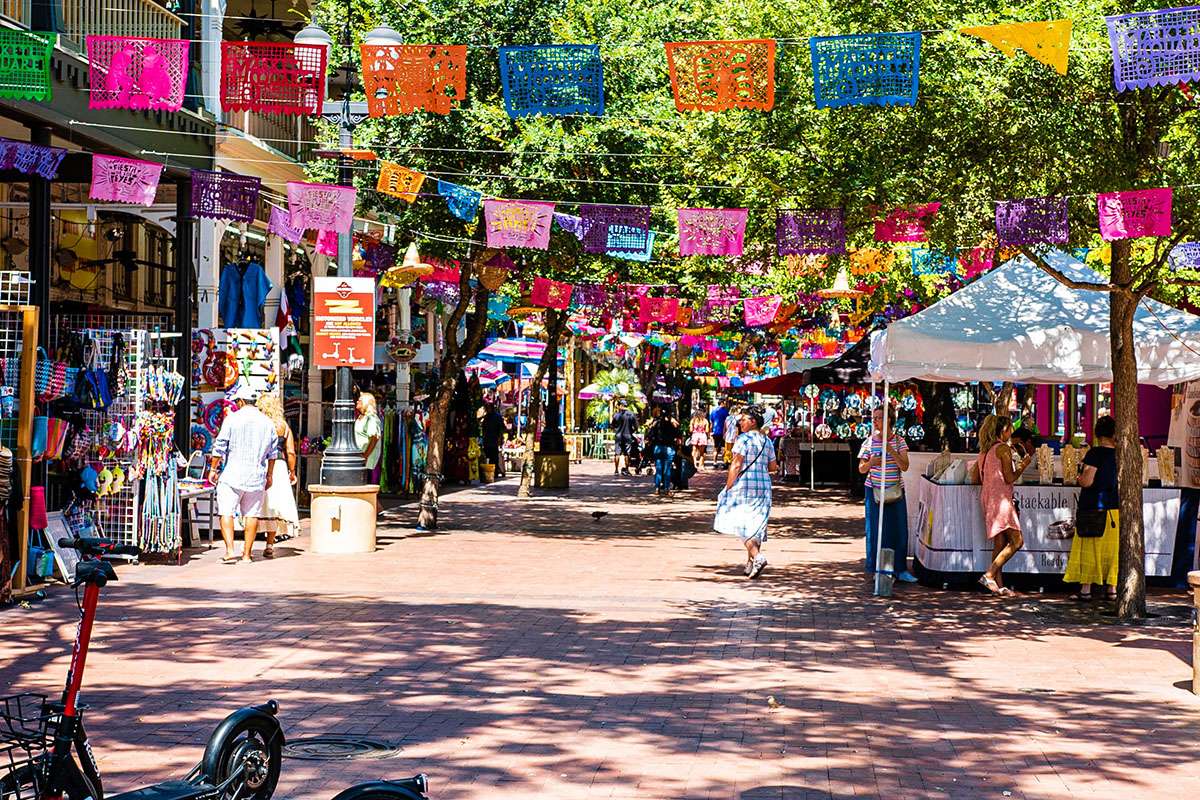
Beneath the fluttering papel picado of Historic Market Square, stalls and shops display embroidered clothing, painted pottery and colourful ornaments.
Further into San Antonio’s predominantly Mexican American West Side, a modest house on South Colorado Street offers a more intimate perspective.
Emilia Sánchez once welcomed people in need of food and shelter into her home. Today, the Casa de Cuentos forms part of the Rinconcito de Esperanza, where the Esperanza Peace and Justice Center brings neighbours together for poetry, music and storytelling.
The writer Sandra Cisneros, who spent many years in San Antonio, understood the tenderness of such small encounters. In her illustrated book Have You Seen Marie?, the search for a missing cat becomes a story about grief, kindness and the quiet reassurance of familiar faces.
There is a similar intimacy to the photographs contributed by local families and displayed in the neighbourhood. Their weddings, family gatherings and everyday encounters belong to a history that rarely makes it into the grand monuments of a city, but without which those monuments can tell only part of its story.
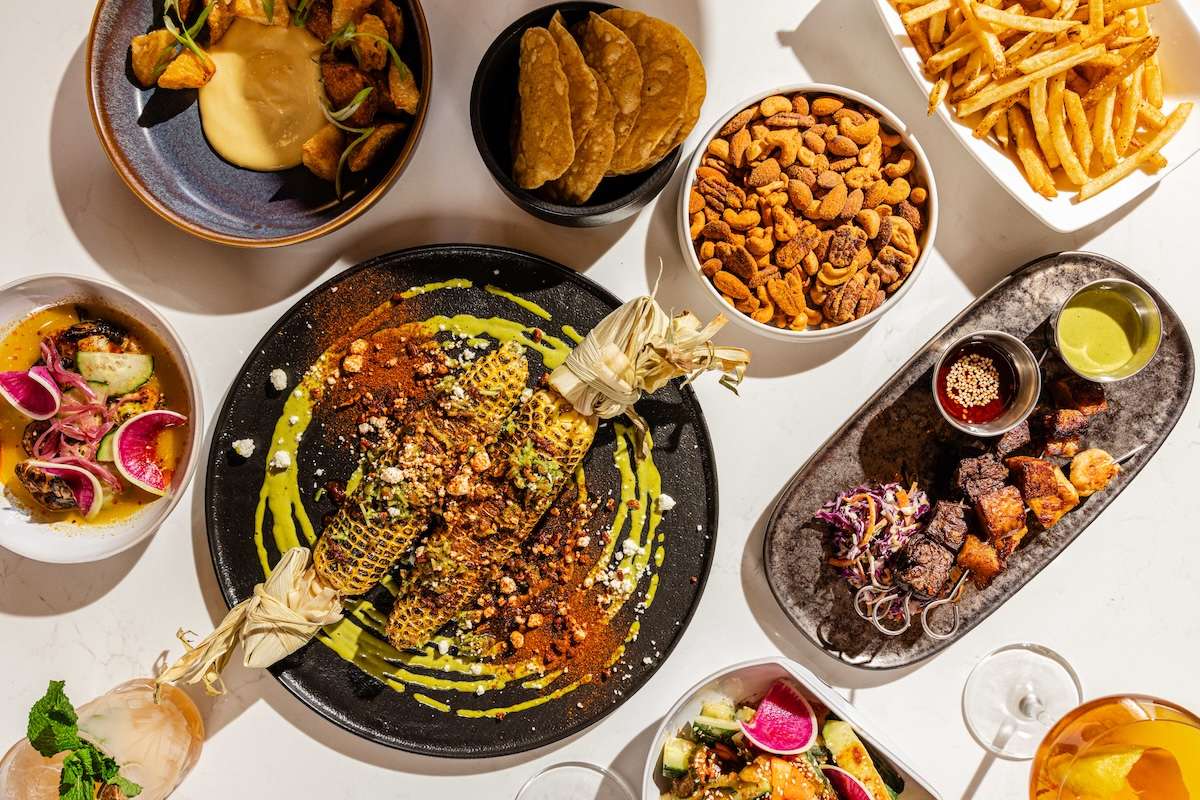
A Place at the Table
A photograph from 1937 shows two women standing over a large basin of dough. Juanita and Esperanza García belonged to a family of cooks whose livelihood once depended upon the outdoor dining rooms of San Antonio’s plazas.
For decades, the city’s celebrated chili queens brought pots, tables, lanterns and food into the squares, serving chilli con carne, tamales and enchiladas. Writers including Stephen Crane and O. Henry romanticised those evenings, but for the women themselves, transporting and preparing an entire kitchen was demanding work.
When health regulations closed the outdoor stands at Haymarket Plaza in 1937, the García sisters and their mother, Eufemia López, adapted by opening an indoor café.
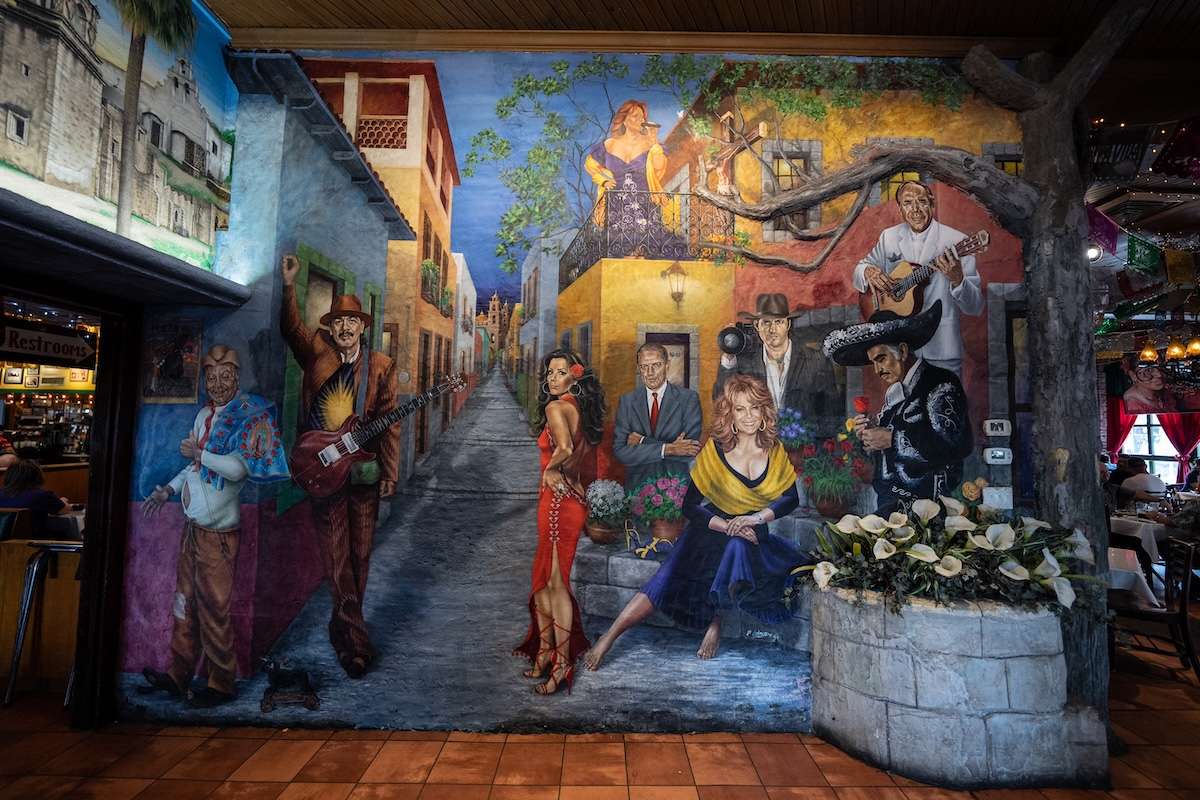
A few years later, Pedro and Cruz Cortez established a tiny café in the market district. Their family’s Mi Tierra Café y Panadería now greets diners with a glorious profusion of festive decorations, an enormous mural celebrating Latino achievements and a bakery counter bright with pink and yellow conchas.
At a neighbourhood taquería, breakfast can be a wonderfully simple affair. A soft flour tortilla, freckled brown from the griddle, folds around scrambled egg and potato, with just enough salsa to give the first mouthful a little heat. Later, the pleasures might be richer: enchiladas beneath a velvety coating of chilli gravy, or the moment of unwrapping a warm tamal, peeling back the corn husk to reveal the tender masa within.
The Fight for a Seat at the Table
Yet one of the most significant meals in San Antonio’s history was served at a department store.
In March 1960, seventeen-year-old Mary Lillian Andrews, president of the local NAACP Youth Council, wrote to downtown businesses demanding an end to segregated lunch counters. Her letter identified a particularly painful absurdity: young people could attend school and use municipal recreation facilities together, but could not sit down together for lunch.
With demonstrations imminent, business and church leaders reached an agreement. On 16 March, several establishments began serving Black customers. Among those who ate at Woolworth’s was a young army medic named Richard Hunt, who would become one of America’s foremost sculptors.
Not every business agreed. Protests continued at Joske’s, where management resisted full integration of its dining rooms.
The former Woolworth building faces Alamo Plaza. Two stories of American freedom, separated by 124 years, occupy the same city square.
In 2017, UNESCO recognised San Antonio as a Creative City of Gastronomy. Behind that distinction lie generations of culinary knowledge, enterprise and hard-won freedoms.
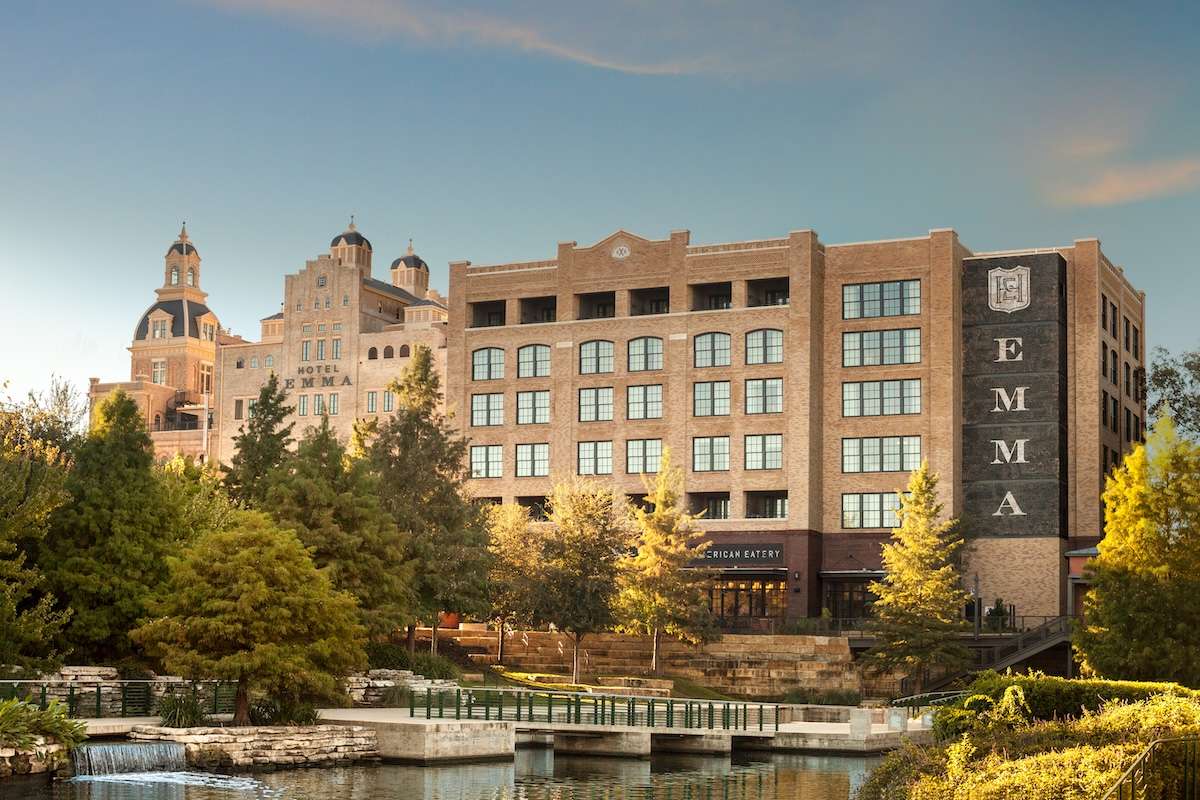
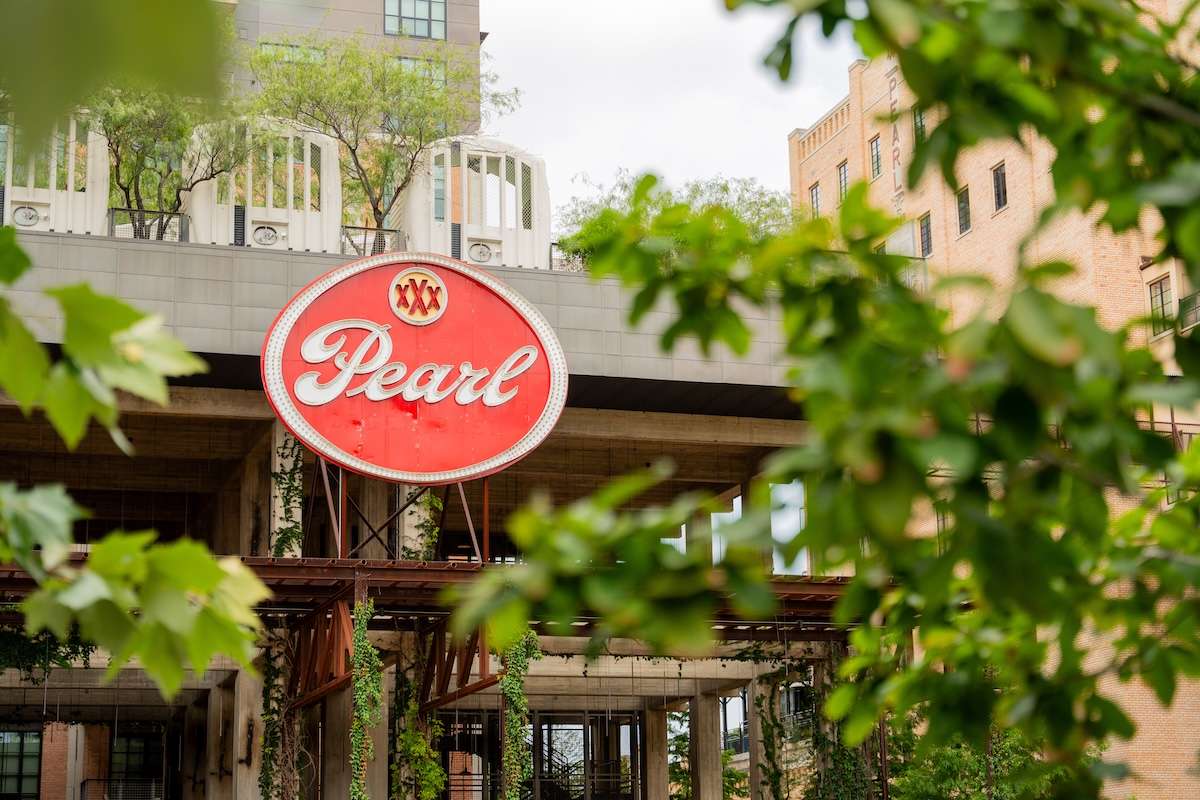
A Brewery Reborn
At Hotel Emma, in the historic Pearl brewery north of downtown, enormous steel vessels have found an unlikely second life as intimate seating alcoves. Beneath the soaring ceiling of the Sternewirth bar, leather chairs, richly patterned rugs and pools of warm light soften the industrial ironwork. There is something wonderfully indulgent about settling into a former brewery tank with a cocktail.
Few hotels wear their working past so beautifully.
The hotel commemorates Emma Koehler, who assumed control of the brewery after her husband’s death in 1914 and steered the business through Prohibition by diversifying its production.
Today, restaurants, a food hall and the Culinary Institute of America’s San Antonio campus occupy the historic complex. The city’s brewing heritage also survives in the former Lone Star Brewery, now home to the San Antonio Museum of Art, while the handsome houses of the King William Historic District recall the prosperity of German immigrant families.
The legacy of Central European immigration survives somewhere considerably less obvious, too: inside the bellows of an accordion.
A City That Dances
The exuberant melodies of a conjunto accordion rise and fall above the deep, ringing strings of the bajo sexto. Beneath them is the unmistakable rhythm of the polka, carried across an ocean and given a new character in the Mexican American dance halls of South Texas.
San Antonio-born Leonardo ‘Flaco’ Jiménez grew up playing alongside his father, accordionist Santiago Jiménez Sr. From the dance halls of Texas, he took conjunto to audiences around the world, working with Ry Cooder, Bob Dylan and the Rolling Stones.
The annual Tejano Conjunto Festival, organised by the Guadalupe Cultural Arts Center, continues to bring musicians and dancers of different generations together.
On the East Side, the Carver Community Cultural Center has its own remarkable performance history. Ella Fitzgerald and Duke Ellington played here when segregation restricted the venues available to Black artists and audiences. In 1973, residents stood in the path of demolition machinery to save the building.
The city’s appetite for celebration reaches its height during Fiesta. From its origins in an 1891 floral parade commemorating the Texas Revolution, the festival has grown to encompass the San Antonio Zulu Association’s A Taste of New Orleans, the illuminated Fiesta Flambeau procession and the Texas Cavaliers River Parade.
And there is always the pleasure of a mariachi ensemble, its violins, trumpets and guitars turning dinner into an occasion.

USA 250: Before You Go – What to Watch, Read and Listen To
Watch: The Alamo (1960)
John Wayne directs and stars in this spectacular Western, an enduring expression of American frontier mythology, accompanied by Dimitri Tiomkin’s rousing score.
Watch: Selena (1997)
Gregory Nava’s film, starring Jennifer Lopez, celebrates the Mexican American singer whose talent transformed Tejano music’s reach. Selena Quintanilla’s business ventures included a clothing boutique in San Antonio.
Read: Have You Seen Marie? (2012)
Sandra Cisneros and illustrator Ester Hernández bring the city’s neighbourhoods to life through a beautifully observed story of loss, companionship and a missing cat.
Read: A Revolution Remembered (1991)
Edited by Jesús F. de la Teja, the memoirs and correspondence of Juan N. Seguín offer an indispensable Tejano perspective on the Texas Revolution and the troubled years that followed.
Listen: Mal Hombre (1934)
Recorded in San Antonio, Lydia Mendoza’s extraordinary performance pairs an expressive voice with twelve-string guitar. It helped launch one of the most significant careers in Mexican American music.
Listen: Partners (1992)
Flaco Jiménez welcomes Linda Ronstadt, Emmylou Harris, Ry Cooder and others into his musical world, taking the accordion across genres and cultural borders.
How to Spend Three Days in San Antonio
Day One: The River and Historic Centre
Explore the Alamo, La Villita, Historic Market Square and Main Plaza. Enjoy dinner beside the river and, if scheduled, catch The Saga at San Fernando Cathedral.
Day Two: The Missions and the West Side
Follow the Mission Reach to the four historic missions, then explore the West Side’s community arts spaces and neighbourhood restaurants.
Day Three: Art, Architecture and Music
Discover King William, the San Antonio Museum of Art and Pearl. Finish with live music or a performance at the Carver.
Planning Your Visit
Getting There: UK visitors can reach San Antonio International Airport via a US gateway.
Where to Stay: Downtown offers easy access to the River Walk and historic centre; Pearl combines distinctive hospitality with excellent dining.
Getting Around: Explore downtown on foot, cycle the Mission Reach and use public transport or taxis for longer journeys.
Best Time to Visit: Spring and autumn avoid the height of the summer heat. Fiesta takes place in spring.
Tickets: The four National Historical Park missions offer free admission. Reserve free timed entry to the Alamo church and check The Saga’s performance schedule in advance.
Where the Past Is Still Present
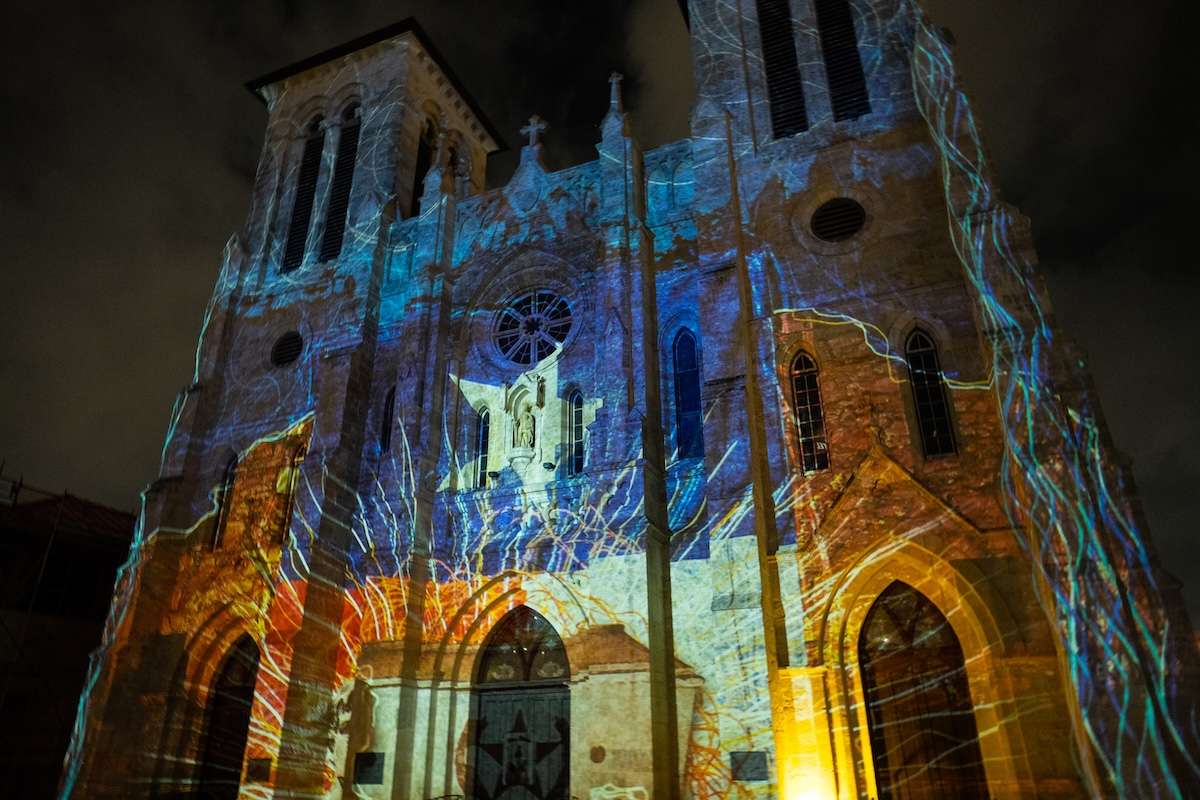
After dark, on selected evenings, the magnificent façade of San Fernando Cathedral becomes the canvas for San Antonio | The Saga, an extraordinary work of video art by French artist Xavier de Richemont.
For twenty-four minutes, centuries unfold across the limestone. Figures emerge from the darkness, landscapes sweep across the towers and the architecture seems to dissolve into colour and music.
There is something particularly moving about experiencing this spectacle in the very square where families from the Canary Islands began building their new lives almost three hundred years ago. When the final images fade, the familiar contours of the cathedral emerge once more.
Beyond the square, a staircase leads back down to the river. Beneath the cypresses, there are still tables to be found, glasses to be filled and tortillas to be shared. Perhaps the first notes of a song will tempt you to stay for another drink.
Spend your days discovering San Antonio’s history and your evenings enjoying everything that generations of its inhabitants have created.
There is no need to look for the past here. Pull up a chair, and you are already in its company.
Discover San Antonio’s extraordinary history, cultural heritage and culinary traditions at Visit San Antonio and plan your Texas adventure at Travel Texas. Continue exploring the remarkable places, people and stories that have shaped America in The Arts Shelf’s USA 250 Series.

