

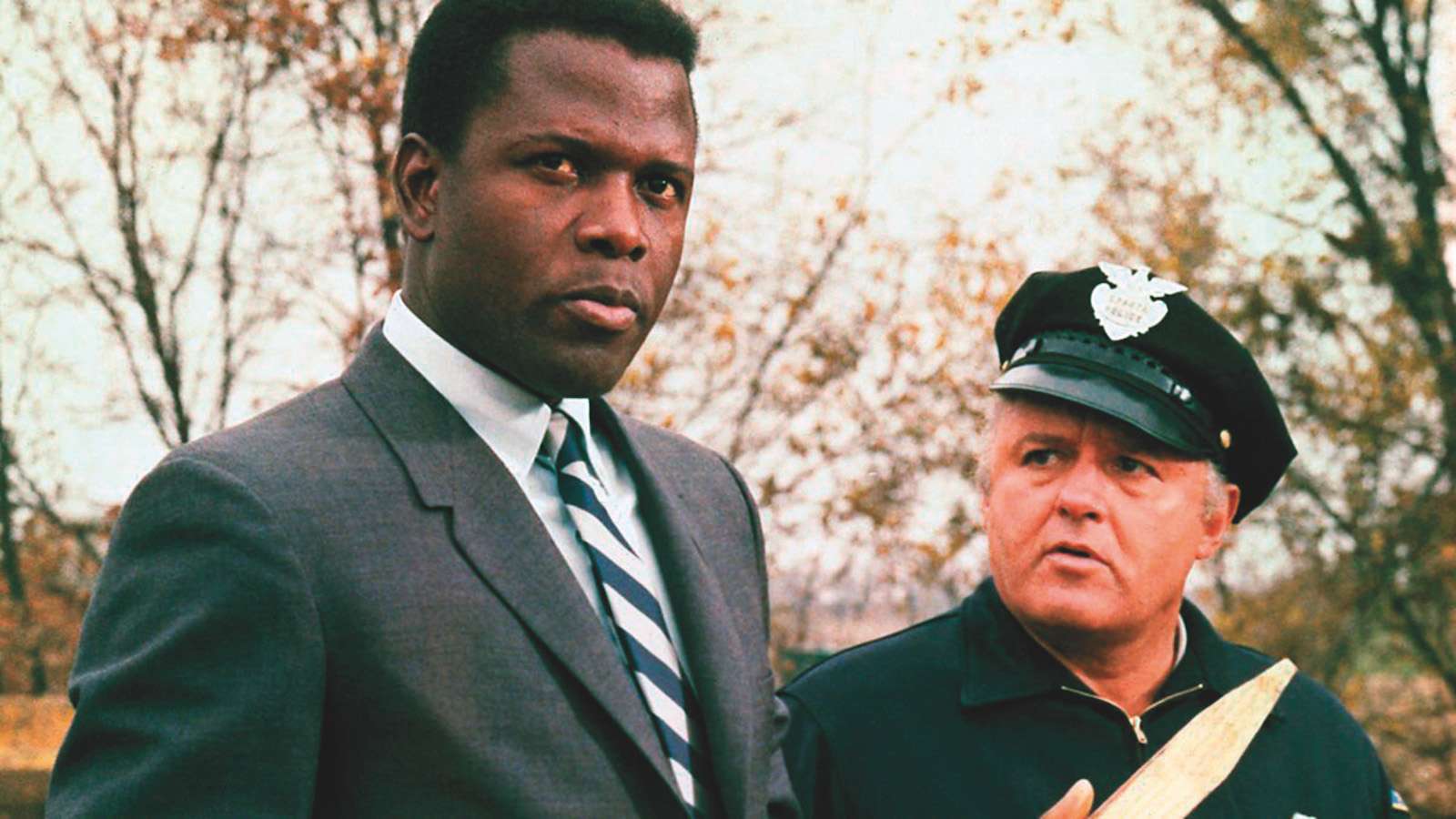
Throughout January, BFI Southbank will celebrate the life and work of Sidney Poitier with SIDNEY POITIER: HIS OWN PERSON, a new season programmed by Jonathan Ali and commemorating Poitier’s life and work with screenings of films that show the progression of his career across more than 40 years.
The Sidney Poitier BFI season includes early work such as NO WAY OUT (Joseph L. Mankiewicz, 1950) and BLACKBOARD JUNGLE (Richard Brooks, 1955), some of Hollywood’s biggest box office hits including GUESS WHO’S COMING TO DINNER (Stanley Kramer, 1967) and IN THE HEAT OF THE NIGHT (Norman Jewison, 1967), and films Poitier both directed and starred in like A WARM DECEMBER (Sidney Poitier, 1973) and STIR CRAZY (Sidney Poitier, 1980).
With further contextual events, including a season introduction – For Love of Sidney Poitier – on 6 January, a compilation of UK Television shows featuring Poitier drawn from the BFI National Archive on 9 January, a screening of a 4K restoration of CRY, THE BELOVED COUNTRY (Zoltán Korda, 1951) introduced by film historian Marcus Powell on 6 January, and a free–to–access Collection Focus on Poitier in the BFI Reuben Library taking place all month, SIDNEY POITIER: HIS OWN PERSON is a fitting tribute to a screen legend who will continue to inspire audiences for generations.
Speaking on the Sidney Poitier BFI Season, programmer Jonathan Ali commented:
“From the outset of his career Sidney Poitier projected a new and dignified African American character – one that dismantled longstanding racist stereotypes. Conscious of his responsibility as the only major Black actor in Hollywood, he initially cultivated a persona of virtue and respectability, but as the winds shifted and audiences began demanding an edgier Black hero, he also used his clout to make films that reflected the new mood. Above all, he imbued all his characters with an emotional truth, which cemented his position as Hollywood’s first Black superstar, and I’m looking forward to celebrating his incredible legacy with audiences at BFI Southbank in this January.”
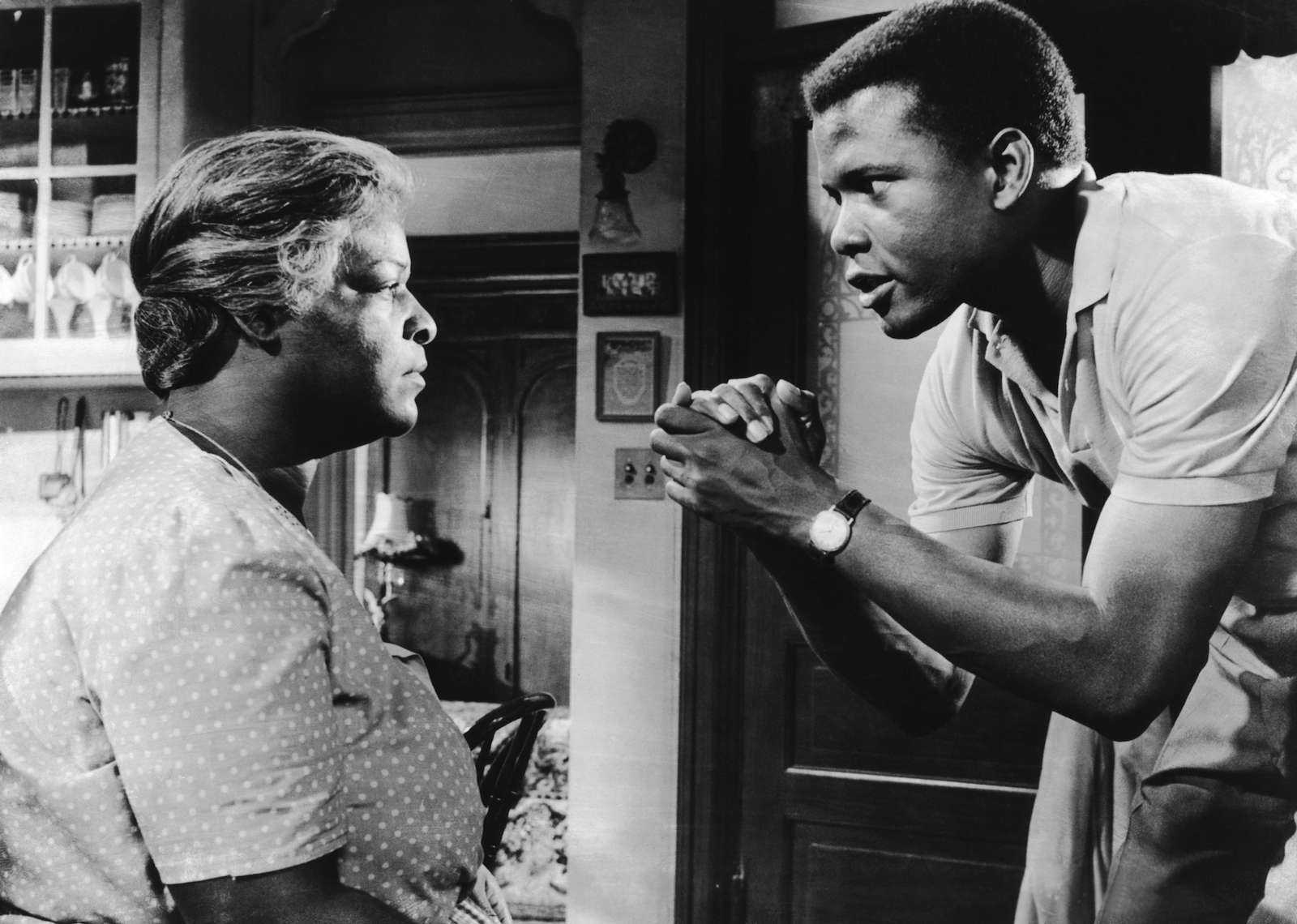
COMPLETE PROGRAMME INFORMATION FOR SIDNEY POITIER: HIS OWN PERSON
Special and Contextual Events
On 6 January, the second anniversary of Sidney Poitier’s passing, join special guests for a celebratory discussion For Love of Sidney Poitier, hosted by season programmer Jonathan Ali, alongside an insightful panel of experts including Jan Asante (Black Film Bulletin) and Nicole-Rachelle Moore (Curator of Caribbean Collections at the British Library). Together they will consider Poitier’s key roles and films, positioning his filmography within the wider landscape of Hollywood, as well as American and Pan-African culture. The event will also reflect on his status as Hollywood’s first Black superstar and his role in inspiring future generations.
Also on 6 January, BFI Southbank’s monthly free screening for Seniors’ (or the usual matinee price for under 60s) will be a 4K restoration screening of CRY, THE BELOVED COUNTRY (Zoltán Korda, 1951), introduced by speaker and film historian Marcus Powell who will also lead a Q&A afterwards. Shot on location in South Africa and the UK, this absorbing film follows an elderly preacher, accompanied by a younger clergyman, as he travels from the country to the city to track down his grown-up children. Adapted from the novel by Alan Paton, Poitier and veteran US actor and civil rights campaigner Canada Lee – who at the time was a refugee from the torments of the McCarthy Communist witch hunts – convince as two individuals who learn to trust and respect each other.
A special event on January 9, Sidney Poitier on UK TV, will screen a compilation of work drawn from the BFI National Archive, beginning with a fascinating edition of the famous BBC Arts series Omnibus from 2000 in which Sidney Poitier talks candidly about his life and career. This will screen with a wide range of other interviews with Poitier, career overviews, analyses and appreciations of his work that aired of UK television, including excerpts from the BBC quiz show Mastermind featuring rounds on Poitier. The BFI Reuben Library will also feature a free Collection Focus on Poitier throughout January, displaying items from the Collection that celebrate his activism and explore his acclaimed career, including biographical and press material and his three autobiographies.
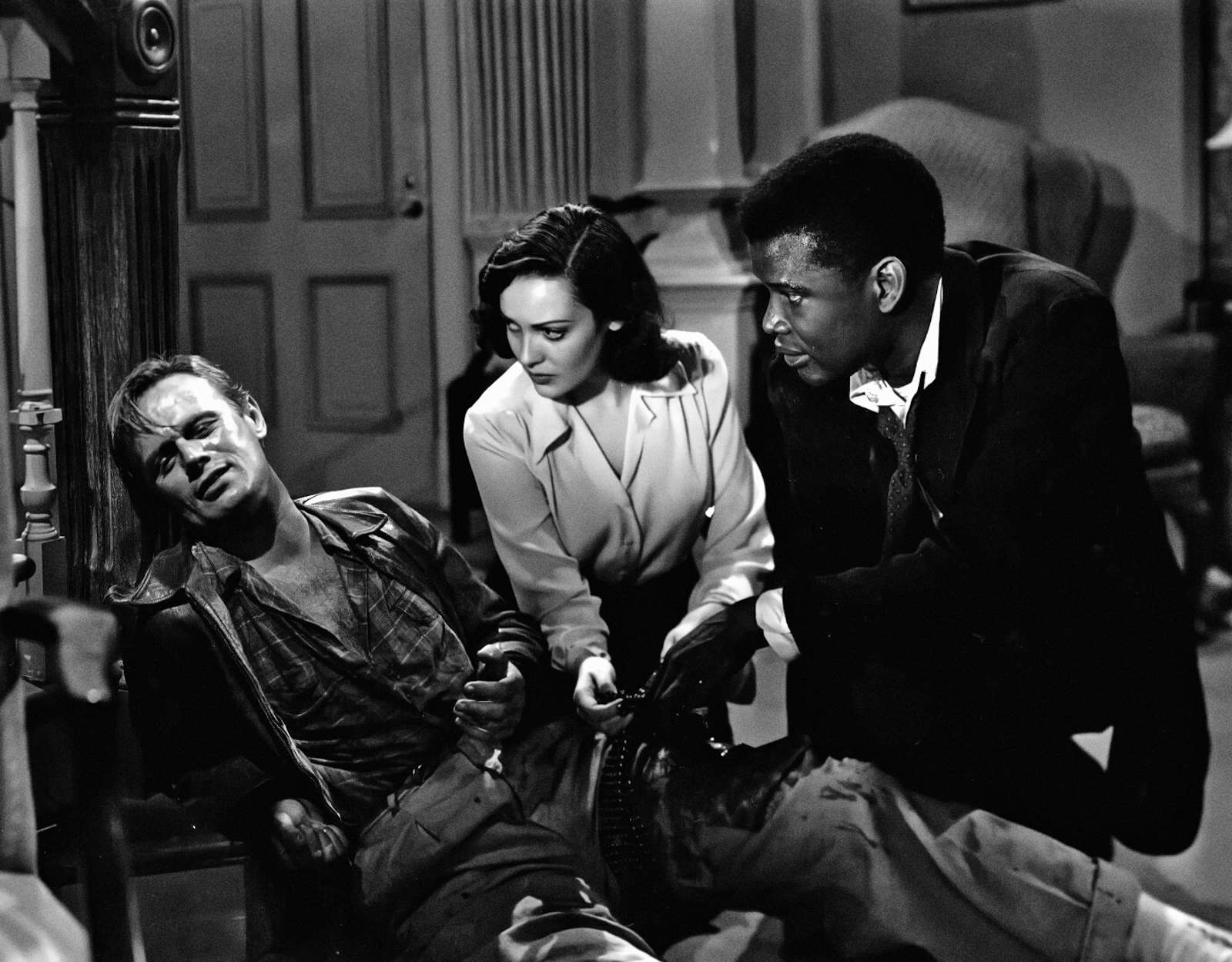
The Early Films
Four films from the beginning of Sidney Poitier’s career, heralding the arrival of Hollywood’s first Black film superstar.
In his landmark debut, NO WAY OUT (Joseph L. Mankiewicz, 1950) Poitier plays a medical intern accused by Richard Widmark’s racist hoodlum of murdering his brother while both were in the Black doctor’s care. Poitier shines in a groundbreaking role that challenged Hollywood stereotyping of Black characters, while establishing the compassionate and dignified persona that would come to dominate his roles over the subsequent two decades.
In BLACKBOARD JUNGLE (Richard Brooks, 1955), a drama that became both a scandal and a box-office success, Poitier plays Gregory Miller, the leader of an interracial gang at an inner-city school where Glenn Ford’s new teacher struggles to maintain control. Although a supporting character, Miller is unforgettable – a sullen, self-assured, sexually charged Black counterpart to the Hollywood youth antihero of the 1950s.
EDGE OF THE CITY (aka A Man is Ten Feet Tall) (Martin Ritt, 1957) is a gritty film that sees Poitier play Tommy Tyler, an ebullient New York City dockworker who takes John Cassavetes’ new hire under his wing. But a racist colleague soon threatens their friendship. Adapted from TV drama (with a role written specifically for him), Tommy is the embodiment of the self-sacrificing hero that defined this stage of the Poitier’s career. Set and shot in Kenya, SOMETHING OF VALUE (Richard Brooks, 1957) stars Poitier as Kimani, the childhood friend of Rock Hudson’s Peter, the son of British settlers. Political circumstances drive them apart – with Kimani joining the Mau Mau rebellion – which eventually leads to a climactic showdown between the former friends. Poitier delivers a compellingly complex performance, in the first of several films he made in Africa, as a character who fights for liberation from white-minority rule.
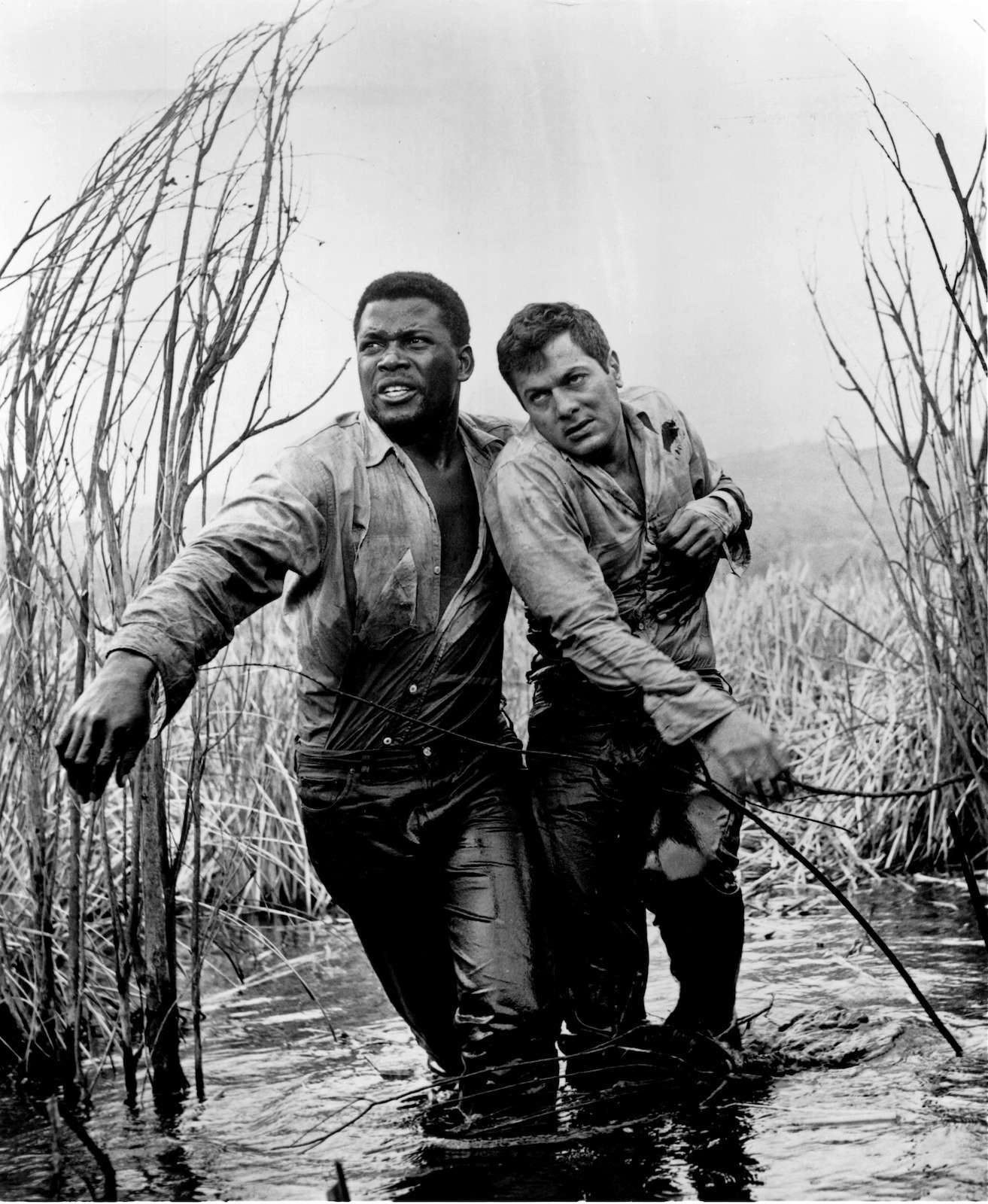
Stardom
Poitier’s star burns bright in these six films from the period that saw him become Hollywood’s biggest box-office draw.
Poitier’s first collaboration with director Stanley Kramer, THE DEFIANT ONES (Stanley Kramer, 1958) is an action-packed thriller that transformed the actor into the first bona fide Black superstar. He plays Noah Cullen, an escaped convict in the Deep South who is handcuffed to Tony Curtis’ embittered racist. To stay alive and out of reach of the authorities, they forge an antagonistic friendship. As a man seething with rage from a life of indignity, Poitier is superb, and it earned him a landmark first Oscar® nomination for Best Actor. Poitier won plaudits for playing Walter Lee Younger on stage and reprised the central role of Lorraine Hansberry’s play, A RAISIN IN THE SUN (Daniel Petrie, 1961) for the screen, once again capturing the angst of a chauffeur who dreams of better things for himself and his family than life in a cramped apartment on Chicago’s South Side. Accompanied by a formidable ensemble of African American acting talent, Poitier skilfully conveys Younger’s fight for dignity and to be the anchor his loved ones so desperately need.
Poitier makes for a dashing romantic lead as jazz saxophonist Eddie Cook, enjoying the freedom of bohemian Paris with bandmate Ram Bowen in PARIS BLUES (Martin Ritt, 1961). Eddie falls for Diahann Carroll’s vacationing schoolteacher yet is torn when she attempts to convince him to return with her to America and to live life as a second-class citizen. A cameo performance by Louis Armstrong rounds out this film’s many pleasures. Following his historic Best Actor Oscar® win in 1963 for LILIES OF THE FIELD, Poitier joined Anne Bancroft in Sydney Pollack’s ambitious directorial debut THE SLENDER THREAD (Sydney Pollack, 1965). He is riveting as a psychiatry student who must use every tactic he has to keep a despondent woman, who has swallowed a bottle of sleeping pills, on a crisis-centre hotline long enough for the authorities to rescue her.
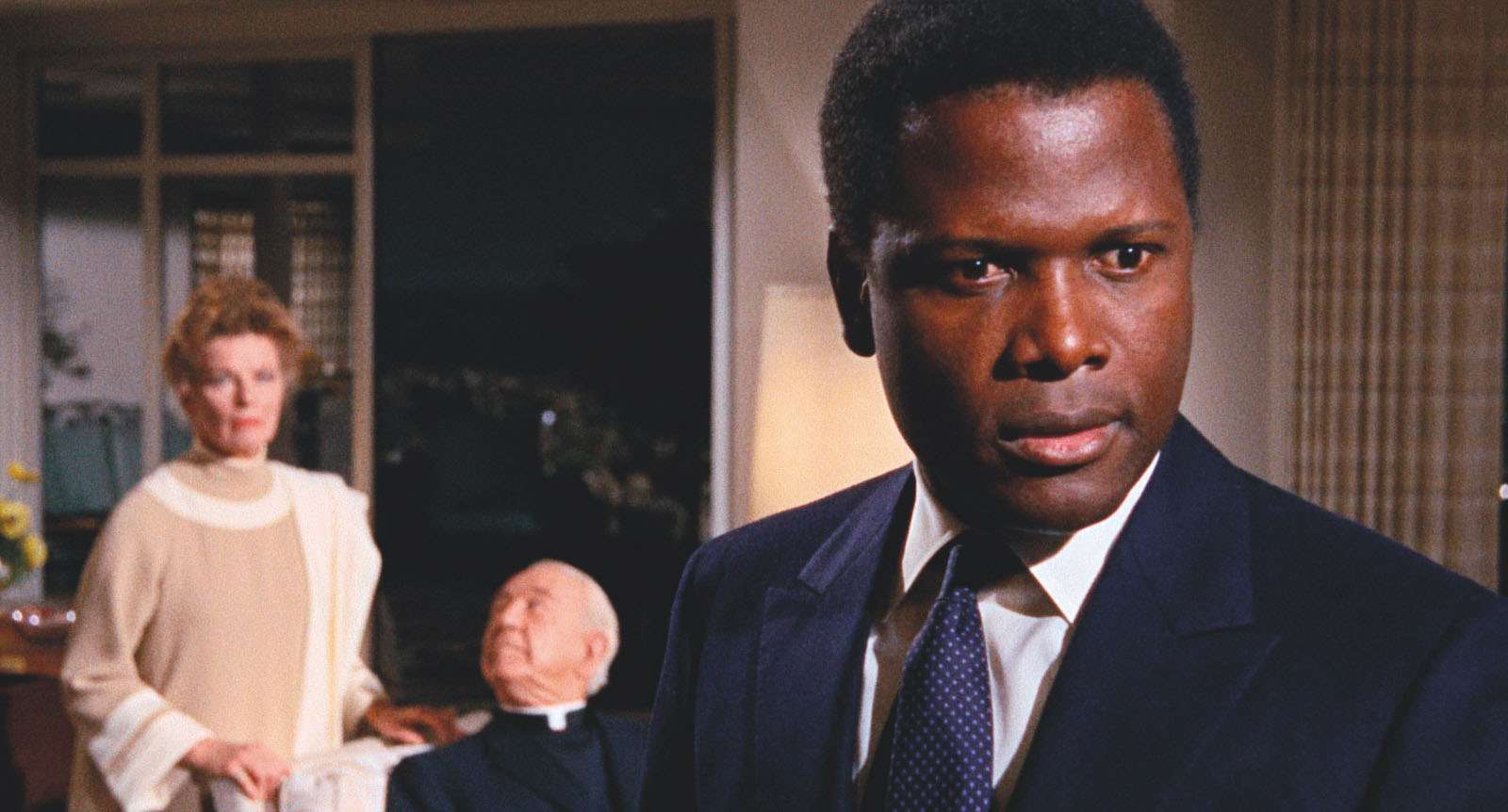
Now one of the great lines in film history, ‘They call me Mr Tibbs!’ announced the arrival of Poitier’s detective to Rod Steiger’s racist Mississippi sheriff in IN THE HEAT OF THE NIGHT (Norman Jewison, 1967). They find themselves working together on a potentially incendiary murder case. Winner of the Best Picture Oscar® and spawning two sequels, this police procedural cemented Poitier’s legacy as a Black cinema icon, and remains as electrifying today as it was when it was first released. In GUESS WHO’S COMING TO DINNER (Stanley Kramer, 1967), seeking to convince Spencer Tracy and Katharine Hepburn’s liberal couple that he is a worthy prospective son-in-law, John Prentice comes across as the epitome of the accomplished, clean-cut Poitier hero. Stanley Kramer’s social conscience drama was a commercial hit in the US and became a cultural milestone. Shot in vivid Technicolor, the film is presented in the season in a sumptuous new 4K restoration.
Blaxploitation and Beyond
As the times change, so does the Poitier persona – from star to director to legend.
In the entertaining celebration of Black love, FOR LOVE OF IVY (Daniel Mann, 1968), Poitier plays Jack Parks, a successful businessman with an illicit gambling operation who is blackmailed into seducing the maid of a white suburban family. With his virile, roguish, tuxedo-clad character, Poitier deliberately refashioned his cinematic persona for a film based on his own original story idea. THE LOST MAN (Robert Alan Arthur, 1969) stars Poitier as Jason Higgs, a civil-rights activist-turned-radical who believes ‘nonviolence is one thing’, but ‘passive dying is another’. Wounded during an armed robbery that was intended to finance the Black struggle, Higgs seeks help from Joanna Shimkus’ white, middle-class liberal, even as the police close in. Poitier is at his most militant in a film that reflects America’s changing racial and political climate.
A WARM DECEMBER (Sidney Poitier, 1973) sees Poitier play an American widower who visits London and becomes enchanted with the striking niece of the ambassador of a newly independent African nation. She is also a woman with a tragic secret. In his first effort as sole director, Poitier movingly imbues his drama with the spirit of Pan-African awareness. Poitier lent his considerable star power to THE WILBY CONSPIRACY (Ralph Nelson, 1975), an anti-Apartheid action thriller, in which he plays a militant freedom fighter recently released from prison, who becomes embroiled with the police and goes on the run with Michael Caine’s hapless, avowedly neutral Englishman. With this wry yet intense character, Poitier continued his shift away from his former, more clean-cut, screen persona.
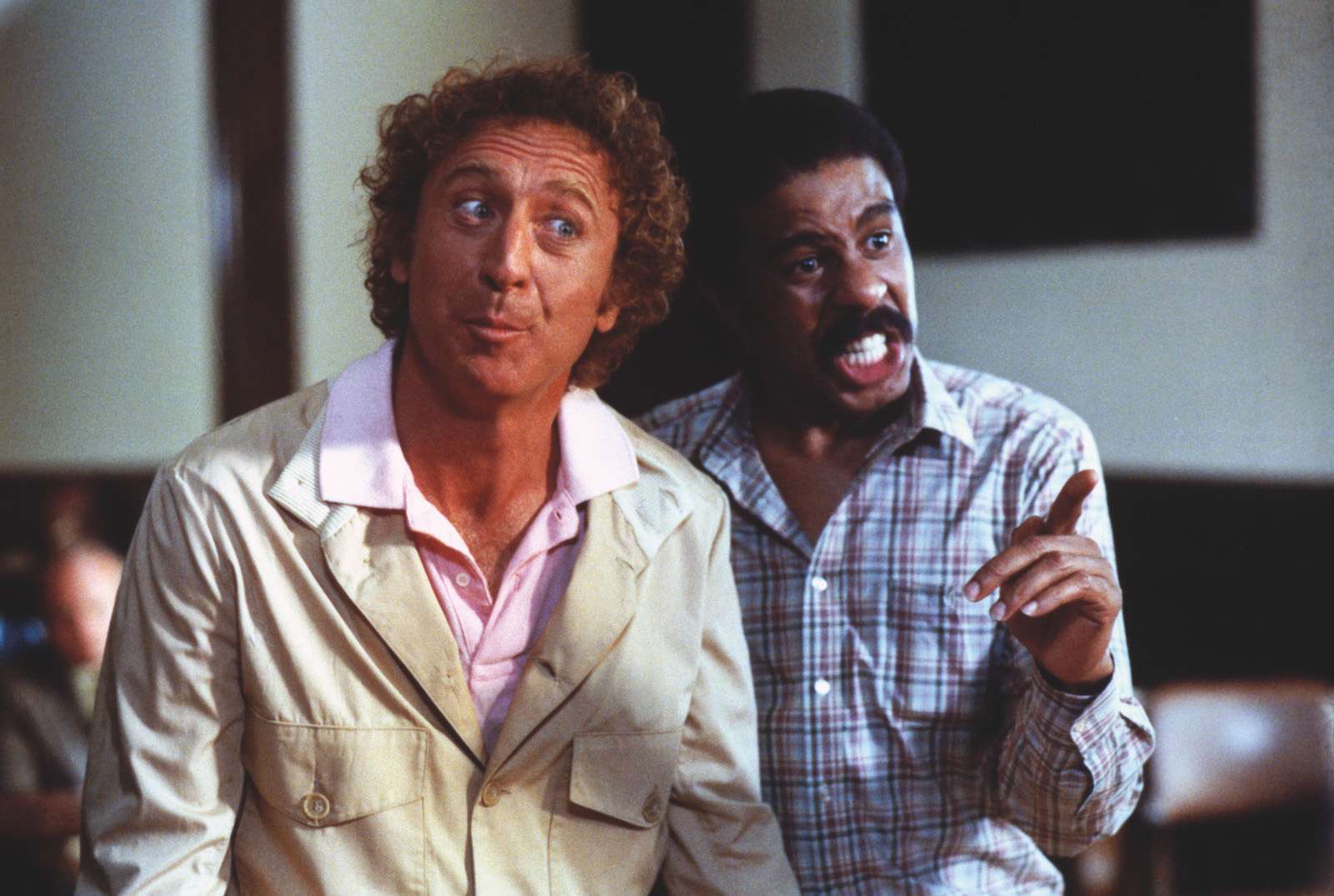
The first film Poitier directed but didn’t act in, STIR CRAZY (Sidney Poitier, 1980) is a buddy comedy that sees Richard Pryor and Gene Wilder’s wrongly convicted best friends hatch an elaborate escape plan involving a prison rodeo. Poitier makes space for the two comic greats to showcase their considerable improvisational talents and it became the first film by a Black director to gross over $100m at the box office. Rounding out the season, in SNEAKERS (Phil Alden Robinson, 1992) Poitier plays a retired CIA agent and member of an expert security team who are blackmailed by government agents into stealing a mysterious black box, only to find themselves ensnared in a web of intrigue. Following a trailblazing career as the first superstar Black actor, Poitier gives an enjoyably collegial performance in this, his penultimate big screen role.
Also coming to BFI Southbank in February will be BLACK RODEO, a season that chronicles the history of the African American Western, featuring two films starring Sidney Poitier – DUEL AT DIABLO (Ralph Nelson, 1966) and BUCK AND THE PREACHER (Sidney Poitier, Joseph Sargent, 1972), which he also co-directed.
Further details of BLACK RODEO will be announced soon.
Discover the very best in Arts, Culture, Travel, Leisure and Lifestyle news and reviews with The Arts Shelf. Enjoy reading our content? Love Movies, Theatre, Opera, Books, Travel, Video Games, Art and Exhibitions, Music, Ballet and Dance, Days Out, Events, Competitions and Collectibles? Make sure to follow us on Facebook, X, Instagram, YouTube, and Sign Up to the Mailing List to be kept up to date with all the latest news and reviews.

