

The Accrington Pals
By Peter Whelan
The Lauriston Studio, Altrincham Garrick Playhouse
First premiered at the Warehouse, London back in April 1981 by the Royal Shakespeare Company (though not published until one year later), Peter Whelan’s extremely moving World War I drama is a stirring tribute to a once close-knit community of ordinary people wavering on the brink of constant change, and feels particularly profound in this First World War Centenary year.
On the eve of the First World War the young men of Accrington hear Kitchener’s call for a New Army and subsequently become the smallest town in England to raise a Pals Volunteer Brigade. Upon arriving in France, the brutal reality of the trenches is far beyond anything they were prepared for. Back home amongst the women they have left behind – mothers, wives, daughters, lovers – nothing can ever be the same again.
The play spans a period of around two years, from the 700-strong Accrington battalion marching off to the Western Front in August 1914 through to the Battle of the Somme in April 1916. Unusually, however, the play is not so much about the men, but rather the town of Accrington itself, and the journey and increasing unification of the women they have left behind as they adjust to their new roles. Whelan manages the admirable task of cramming the piece with a vast array of economic and socio-political issues and war-related themes, but without ever actually laying blame or making things seem overly gratuitous.
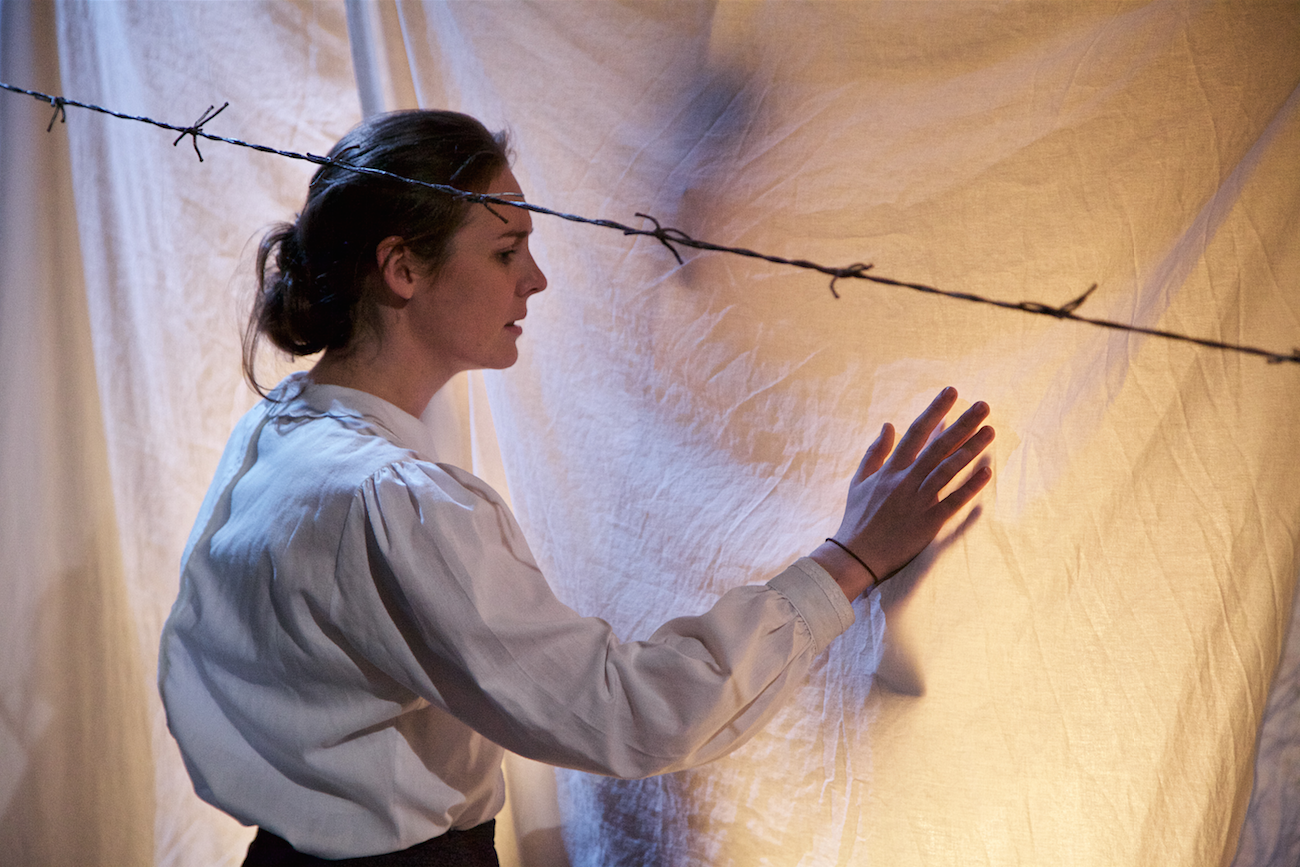
It is quite a challenge to stage a piece as complex as The Accrington Pals in the intimate confines of the 49-seat Lauriston Studio, however helmed by the directorial team of John Chidgey and Ros Greenwood – and played out on a minimalist, though very effective white-box set (also designed by Greenwood) – everything about the production just works. The almost claustrophobic intimacy which the studio setting presents only works towards enhancing the sense of familiarity and solidarity between the characters, further reinforcing the various tones and underlying themes presented.
One of the play’s key strengths is that it achieves a very fine balance between warm humour and hard-hitting pathos, perfectly capturing the various contradictions of the time and delivering a powerful and very authentic feeling examination of contemporary small-town life. Whelan constructs his dialogue with an almost poetic flair and his use of satire and dramatic irony are particularly effective.
The production’s closing twenty minutes or so are amongst the most eloquent and heartrending I have witnessed on stage for some time. The closing image of young Reggie, stood alone by a darkened cenotaph, is beautifully achieved and serves as an intense reminder of the devastating loss and waste of so much community patriotism and local pride.
The predominantly young ensemble cast of ten are very strong throughout, so it would be unfair to single out individual performers. Glancing through the biographies in the programme you may be surprised to learn of the relative inexperience of many of the cast, however I have to say that any such lack of stagecraft or experience is by no means evident.

