


Child’s Pose (Poziţia Copilului)
Studiocanal / Călin Peter Netzer / 2013 / Romania
Running Time: 108 minutes (01:47:36)
Aspect Ratio: 2.35:1
Genre: Drama
Certificate: 15
Image: Colour
Language: Romanian
Subtitles: English
——————————————————-

——————————————————-
Winner of the Golden Bear at the 2013 Berlin International Film Festival, beating the likes of Bruno Dumont’s ‘Camille Claudel 1915’, Steven Soderbergh’s ‘Side Effects’, Sang-soo Hong’s ‘Nobody’s Daughter Haewon’ (also screening at LFF) and Ulrich Seidl’s ‘Paradise: Hope’ to the title, this third feature film from the Romanian director, Călin Peter Netzer proves a sharp, bleak and strangely compelling examination of ethics, humanity and the modern Romanian justice system.
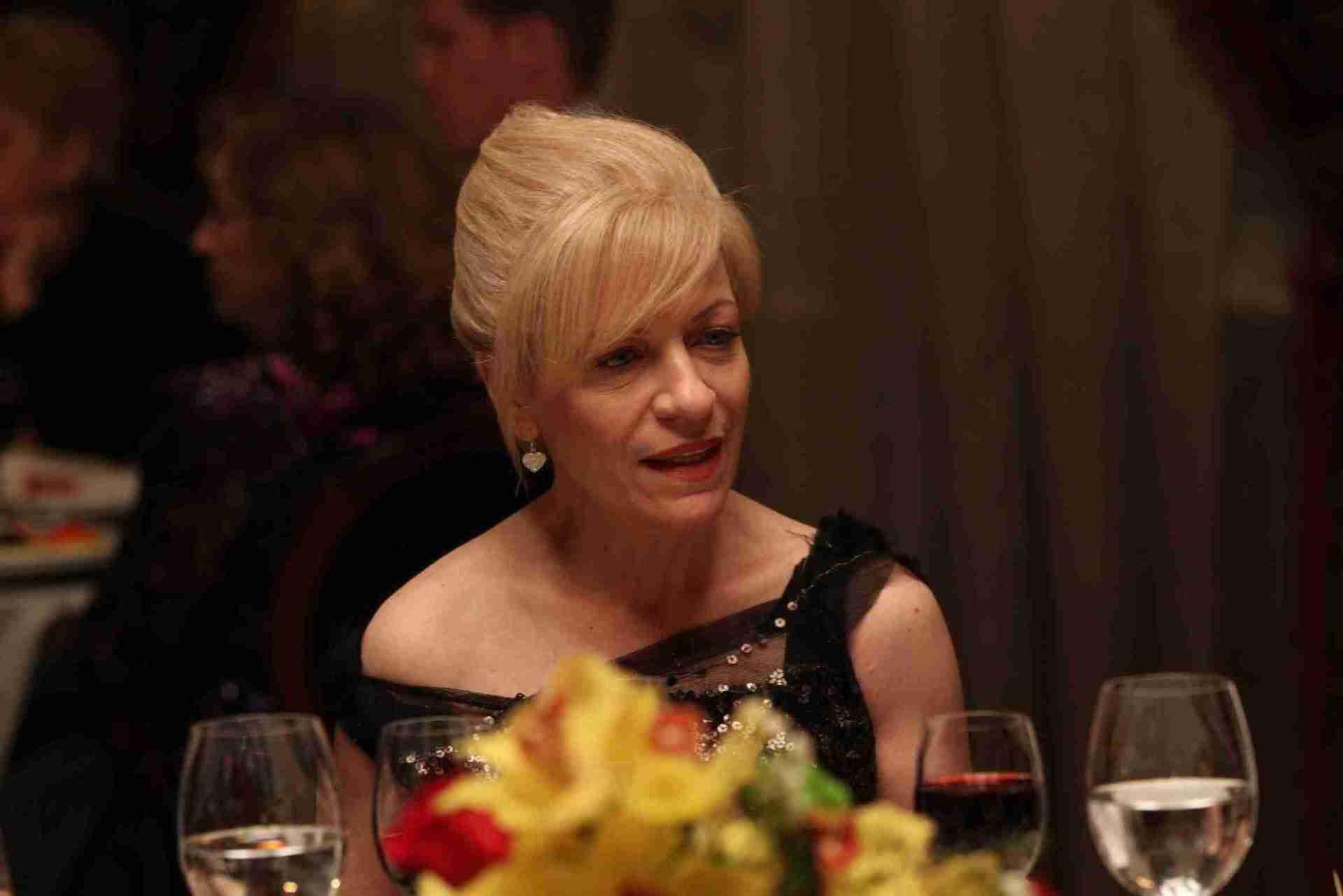
Bucharest. Present Day. Wealthy middle-aged architect, Cornelia Kerenes (Luminita Gheorghiu) spends her life surrounded by her upper-class bourgeois society friends, colleagues and acquaintances.
When Cornelia learns that her son Barbu’s (Bogdan Dumitrache) reckless driving has caused the death of a fourteen-year-old boy, with Barbu now facing a substantial prison sentence for hit and run, the dominant matriarch, making full use of her society status, goes to great lengths in an attempt to protest the innocence of her lazy and ungrateful only child; at one point even emotionally blackmailing the victim’s grieving family.
Though there are various plot elements introduced throughout the piece (social commentary, political allegories, etc) the film never loses sight of the fact that the primary concern is on Cornelia’s maternal obsession for only child. Almost at the first instance we are introduced to Cornelia she is complaining that her son’s partner is not good enough for him, and about the fact that she has not yet given him a child of his own, which establishes the tone of the film pretty clearly from the off.
Again introducing the elaborate social events and the near-supercilious, bourgeois company with which our central characters are associated early on – for example we see Cornelia wining and dining alongside renowned opera singers and political figures – further helps to determine and enhance the class boundary and subtle hostility that continues to develop as the various layers of the film begin to unfold.
Looking at the film from the outside it suggests a premise that could quite easily become too artificial and melodramatic in the wrong hands, however with Netzer at the helm that is never the case, and he effectively ensures that the film remains authentic, subtly engrossing and that the universal themes of domestic crisis and class opposition (here being the well-off, upper middle-class against the poorer, lower class) are clearly resonant to all.
Though ultimately driven by a superb central performance from Luminita Gheorghiu as the determined Cornelia, the ensemble cast are all of a consistently high standard, with notably strong performances from Bogdan Dumitrache, Natasa Raab, Ilinca Goia, Florin Zamfirescu and Vlad Ivanov.
If I have one concern with the film , it is that the handheld cinematography, often captured in fairly long, single takes does become ever so slightly tiresome, and I really do feel the film would benefit further from a more stationary approach, as opposed to the rather shaky, single-camera style that has ultimately been utilised.
Though fairly minimalist in its overall approach, Călin Peter Netzer’s highly accomplished film renders a very intricate and profound portrait of class, infatuation and morality, and co-written with Răzvan Rădulescu (The Death of Mister Lazarescu, 2005), delivers a very impressively composed slice of contemporary Romanian social commentary; it is no wonder then that the film has now been selected as Romania’s submission for the Academy Award for Best Foreign Language Film for the upcoming 86th OSCARS.
——————————————————-
——————————————————-

